Get Full Government Meeting Transcripts, Videos, & Alerts Forever!
Get email alerts on the Wildfire Policy topic
No spam. Unsubscribe anytime.
Senate advances substitute for SB122 to shift wildfire approach from suppression to prevention and risk‑based local matching
Summary
Senate heard a detailed presentation on substitute SB122, which rewrites fire‑law provisions to make prevention, mitigation and training local obligations tied to a state assumption of catastrophic suppression costs; the chamber moved the substitute forward for further consideration.
Senators debated a comprehensive substitute to Senate Bill 122 intended to reform statewide wildland fire policy. The substitute—developed over a multi‑year, multi‑stakeholder process—would rewrite statutes governing forestry, fire and state lands to emphasize prevention, mitigation and preparedness rather than relying primarily on suppression.
Under the substitute, the state would assume the cost of suppressing catastrophic wildfires in exchange for local governments (cities and counties) undertaking prevention, preparedness and mitigation projects proportionate to a risk‑based match. The bill contemplates a predetermined scale that assigns each locality a risk level and a corresponding expectation to participate via project work or equivalent contributions rather than direct cash in some cases. The sponsor stressed the policy is intended to reduce long‑term suppression costs by investing in fuel reduction, firefighter training and other on‑the‑ground work.
Supporters described a collaborative process with the League of Cities and Towns, counties, the Division of Forestry, Fire and State Lands, and other stakeholders. The substitute clarifies responsibilities when fires cross jurisdictional borders and aims to create an equitable funding approach for suppression costs over time. The floor presentation included discussion of recent state investments in fuels‑reduction projects and the policy rationale that prevention gives a high return on investment.
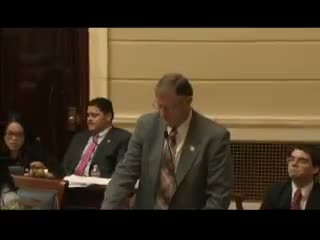
Motion and next steps: the substitute was presented on the floor and the sponsor said he would be open to questions; the chamber did not complete a final passage vote during this excerpt and the sponsor indicated some items may be circled for later consideration to allow broader input and attendance.
Implications: if enacted, the measure would shift fiscal and operational incentives for local governments and require coordination with the Division of Forestry, Fire and State Lands to implement risk assessments and matching requirements.