Get Full Government Meeting Transcripts, Videos, & Alerts Forever!
Get email alerts on the Legislative Votes topic
No spam. Unsubscribe anytime.
Senate clears multiple bills in routine votes; key measures sent to House
Summary
The Utah Senate passed a swath of bills on education, public safety, health and transportation in largely unanimous or near-unanimous roll calls, sending measures such as SB 163 (student privacy/Utah Futures), SB 165 (public safety officer reimbursements), SB 168 (math competency), and others to the House for consideration.
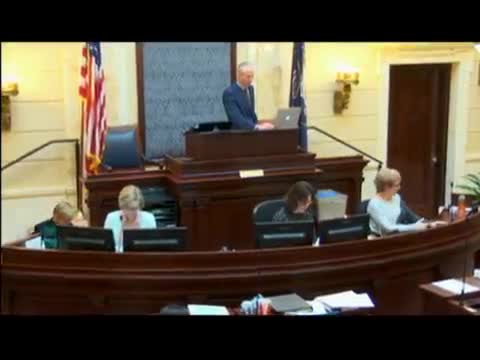
The Utah State Senate spent its floor session advancing a broad group of bills across education, health, transportation and public safety, voting mostly by roll call to send measures to the House for further action.
Among the bills approved: second substitute Senate Bill 163 (clarifications to student information use in Utah Futures) passed by voice and later was reported by the clerk as receiving 29 yea votes, 0 nay votes and will be transmitted to the House. First substitute Senate Bill 165, described by its sponsor as a reimbursement scholarship to help police officers pursue postsecondary credentials, passed and was sent to the House. Second substitute Senate Bill 168, covering career- and college-readiness mathematics competency revisions, passed on a roll call reported as 26 yea, 2 nay, 1 absent.
The body also handled a range of other measures that received routine passage during the session. Sponsors moved to substitute amended language on several bills where stakeholders raised concerns (for example SB 189 and SB 130), and the chamber approved suspensions of the three-reading requirement where sponsors sought expedited consideration (for example SCR 9, a concurrent resolution on oral health for at-risk populations).
Clerk’s tallies and sponsor summaries were the primary evidence of outcomes recorded on the floor. Several bills were described as having no significant fiscal note because analysts estimated the affected populations were small or because substitutions change fiscal impacts; when fiscal implications were discussed senators sought clarification on funding sources and accountability for any new appropriations.
The Senate recessed at midafternoon after making routine announcements and recognizing visiting students. The calendar shows many of the measures now proceed to the House for further consideration.