Get Full Government Meeting Transcripts, Videos, & Alerts Forever!
Get email alerts on the Retirement Security topic
No spam. Unsubscribe anytime.
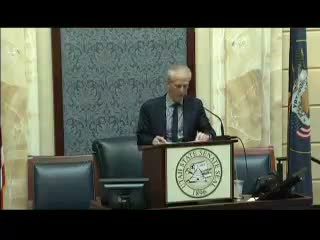
Senate debate centers on SB 133, a one-year tax credit to expand small-employer retirement access
Summary
Senate sponsors and colleagues debated second substitute Senate Bill 133, which would offer a one-year $500 tax credit to small employers that sign up employees for a payroll-deduction retirement plan and direct the state treasurer to issue an RFP to vet private plans; debate focused on fiscal cost (~$550,000), whether the state would compete with private industry, and program design.
Senators debated second substitute Senate Bill 133, a measure to encourage more Utah workers to save by offering employers with fewer than 100 employees a one-year $500 tax credit if they enroll in a qualified payroll-deduction retirement plan.
Sponsor Senator Wyler said the bill aims to increase access to workplace retirement and ‘‘prime the pump’’ for private savings, noting that ‘‘the average Utahan . . . has less than $5,000 saved for their own retirement.’’ He described two core program features: the payroll-deduction enrollment that increases participation and a state-treasurer–led RFP process to vet private plans so small employers do not have to do the paperwork themselves.
Opponents questioned whether the proposal would create government competition with private retirement providers. Senator Jenkins said she was concerned the state would be ‘‘creating what many will believe is a safe haven’’ and that groups including the Utah Bankers Association and NFIB had expressed opposition. Another senator said the plan appeared to expand government at the expense of private enterprise.
Sponsor Wyler responded that the treasurer would not run a government plan but would solicit bids from private firms and endorse one or more qualified plans; he said any employer that signs up with a qualifying plan during the 12-month window would be eligible for the tax credit. He added the fiscal note for the amended bill is approximately $550,000 and that he had worked with national partners and industry representatives while drafting the bill.
The sponsor moved the second substitute for passage and the Senate called a raw call vote; the transcript excerpt provided does not include a clear final tally for SB 133 in the recorded segment. The floor debate centered on balancing program design, the stated purpose of increasing retirement savings, and concerns about market effects and the fiscal impact.
Next steps: the sponsor moved the bill and the Senate proceeded to a roll-call procedure; the transcript excerpt does not record any subsequent enrollment or implementation steps beyond that motion.