Get Full Government Meeting Transcripts, Videos, & Alerts Forever!
Get email alerts on the Public Health topic
No spam. Unsubscribe anytime.
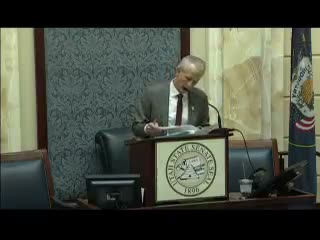
Senate hears extended floor presentation on SCR9 declaring pervasive online sexual content a public‑health concern
Summary
Senator Wyler presented SCR9 as a nonbinding resolution framing pervasive online sexual content as a public‑health issue; he cited research, played a media clip, said the measure is not a ban and moved the resolution to third reading.
Senators heard an extended floor presentation of Senate Concurrent Resolution 9 (SCR9), a nonbinding resolution that frames pervasive online sexual content as a public‑health concern and urges attention to early exposure among minors. Senator Wyler distributed an annotated, footnoted handout and cited academic research discussed at a symposium hosted by the National Center on Exploitation, referencing national researchers and a local academic, Brian J. Willoughby, who, the sponsor said, has published peer‑reviewed work on adolescent development and exposure effects.
Wyler played a short media clip on the chamber floor, described an initially rapid and critical social‑media response after the resolution text posted online, and emphasized the resolution’s intent: "not to ban" but to start a national effort to protect children and young people from early exposure. He told colleagues the resolution spends no money and has no binding regulatory effect; rather, he said it sends a policy signal and invites further study and public awareness.
On the floor Wyler cited survey findings (a referenced poll he said found 73% of Utahns consider pervasive online sexual content a public‑health concern) and summarized research claims — including links he described between early exposure and changes in expectations, relationship intimacy, increased substance use, and depression — while acknowledging critics on social media. The sponsor responded directly to questions about scope and clarified he was not seeking to ban content protected by the First Amendment.
The chamber accepted a motion to read the resolution for a third time. Because SCR9 is a concurrent resolution it does not appropriate funds or impose regulatory controls but signals the Senate's concern and may be used as a platform for additional policy work or outreach.
What’s next: SCR9 was moved to third reading on the floor; further action, amendment or final adoption will follow in subsequent floor calendars.