Get Full Government Meeting Transcripts, Videos, & Alerts Forever!
Get email alerts on the Water Quality Regulation topic
No spam. Unsubscribe anytime.
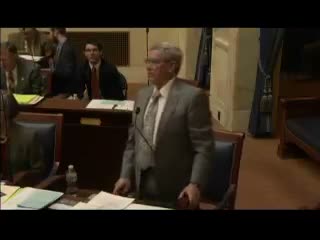
Senate advances third substitute of SB110 to add independent peer review option in water‑quality proceedings
Summary
Senate considered a third substitute to SB110 that would let permit holders challenge certain study proposals or technology‑based nutrient limits by paying for an independent peer review panel; sponsor said EPA primacy concerns were addressed and the substitute was moved to third reading.
A third substitute to Senate Bill 110 was introduced to add an independent peer‑review option into the Division of Water Quality regulatory process. The substitute permits a holder of a water‑quality permit who is substantially affected by a proposed study or technology‑based nutrient limit to request a peer review, provided the challenging party pays the peer‑review costs and files the request before the study proposal is adopted or before a limit is included in a permit.
The substitute sets a minimum three‑member panel, allows additional members if needed, and requires that panelists be mutually acceptable to the director and the challenging party. If the parties cannot agree, a default appointment process is specified: the director appoints one member, the challenging party appoints one, and those two select the third.
The sponsor noted the substitute was requested by Walt Baker, director of the Division of Water Quality, and said an outstanding letter from the U.S. Environmental Protection Agency regarding primacy had been addressed by amendments in the third substitute. Senators asked whether challenges were limited to entities with discharge permits and whether the process would bypass EPA oversight; the sponsor replied that a discharge permit is required to invoke the review option and that primacy issues had been resolved.
On the floor the substitute was called for a roll call motion to read the bill for a third time and advanced; the transcript records the motion and discussion but the floor text does not provide a complete numeric roll call tally for the substitute in the excerpt provided here.
What it means: the change inserts an adversarial peer‑review mechanism into rule‑setting for nutrient limits and studies, shifting some costs of technical review to challengers while preserving a default panel‑selection method. The change could affect how local permit holders, industry stakeholders and the Division of Water Quality litigate technical standards for nutrient limits.
Next steps: the substitute was ordered to third reading; further floor action or final passage could follow on a later calendar date, and implementation details will depend on Division rules and any administrative guidance.