Get Full Government Meeting Transcripts, Videos, & Alerts Forever!
Get email alerts on the Early Childhood Education topic
No spam. Unsubscribe anytime.
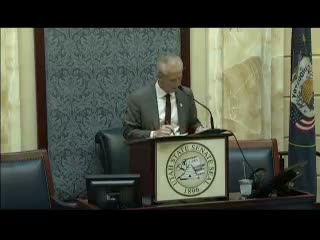
Senate advances first substitute to SB101 to expand targeted pre‑K grants for at‑risk children
Summary
Senate moved the first substitute of Senate Bill 101, a package creating a State Board of Education‑administered grant program to expand high‑quality pre‑K options (including a competitive RFP for home‑based technology) targeted at students in intergenerational poverty; the substitute advanced to third reading on a 24–0 roll call.
Senators moved the first substitute to Senate Bill 101, a measure to create a grant program for high‑quality school‑readiness programs and to focus supports on students identified as most at risk of falling into intergenerational poverty. The substitute replaces an earlier, broader approach with tighter eligibility and a competitive request‑for‑proposals process for home‑based technology options and creates an intergenerational poverty scholarship program to expand parents’ choices.
The substitute text directs the State Board of Education to administer grants and directs the Department of Workforce Services to help set up early‑childhood teacher training. It also requires third‑party longitudinal evaluation of funded programs and explicitly limits grants to programs that meet the bill’s high‑quality pre‑K standards; the substitute text identifies a $2,000,000 set‑aside for home‑based technology school‑readiness grants.
Supporters said the changes narrow the bill’s focus to students who are most likely to benefit and build capacity for evidence‑based pre‑K across schools, private providers and home‑based options. During floor questions, a senator asked whether the substitute retained the original bill’s separate funding amounts for home‑ and school‑based options; the sponsor pointed to the substitute’s lines calling out a $2,000,000 allocation for home‑based technology grants. The sponsor additionally emphasized workforce‑development components to expand teacher training through existing childcare resource centers.
On a motion to move the first substitute to third reading, the chamber held a roll call. The chair announced the substitute received 24 yea votes, 0 nay votes, with 5 absent; the measure will be read for a third time. No final appropriation or enactment vote took place on the floor during this session; the chamber advanced the substitute to the next step in the process.
Background: supporters framed the bill as an effort to reduce long‑term school failure by intervening before third grade — when, they said, reading proficiency becomes a pivotal predictor of later academic outcomes. The substitute adds oversight and evaluation requirements to track outcomes for students receiving grant‑funded services. The measure cites the Intergenerational Poverty Commission’s recommendations as motivating the targeted approach.
What’s next: the first substitute was ordered to third reading; the bill will return to the floor for a final third‑reading vote and potential final passage at a later calendar date.