Get Full Government Meeting Transcripts, Videos, & Alerts Forever!
Get email alerts on the Medical Cannabidiol topic
No spam. Unsubscribe anytime.
Senate advances third-substitute of SB 89 to create licensed CBD payment processor and tightly regulated medical cannabidiol program
Summary
Senators debated competing cannabis bills and advanced third-substitute SB 89, which creates a licensed CBD payment-processor model, limits initial licenses for growers/processors/dispensaries, and emphasizes research and rule-making; sponsor said the bill treats cannabis 'like a medicine.'
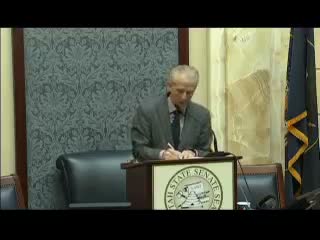
Senator Vickers, sponsor of Senate Bill 89, moved the third substitute and urged colleagues to treat cannabis-derived medicines under a strict medical and regulatory framework. "If it's a medicine, then treat it like a medicine," he said, summarizing the bill's guiding principle.
The bill, as described by Vickers, would create a CBD payment-processor license administered by the Department of Financial Institutions, permit only a small number of licensed growers and processors (two each) and initially authorize a limited number of dispensaries (five). It sets a medicinal ratio (10:1 CBD:THC) and a 5 percent THC cap for allowed dosage forms; physicians could prescribe Marinol where higher THC is medically necessary, Vickers said. He framed SB 89 as emphasizing research: patient outcomes would be gathered to inform future expansion and rule-making authority would be given to state agencies and advisory panels.
Supporters and skeptics pressed the sponsor on implementation details. Senators asked whether SB 89 could be reconciled with Senator Madsen's competing SB 73; Vickers said he would be willing to negotiate and "pick out the best things" if both bills advanced. On timeline and cost, Vickers estimated about 18 months to operationalize the program and cited an initial fiscal-note component—tracking and verification systems—at roughly $1.5 million that could be reduced by using private, existing vendor platforms.
The floor also heard contested policy claims. Senator Stevenson cited studies suggesting states that legalized medical cannabis saw a 25 percent reduction in opioid overdose deaths, asking whether SB 89 (with limited THC) would reduce opioid harms; Vickers replied that the evidence is mixed and that some researchers report opposite findings. Another senator raised accusations that the sponsor sought the bill for private gain; Vickers denied any improper motive and noted legal constraints on his pharmacies and a broad outreach to stakeholders during drafting.
After extended debate and a roll-call, the Senate moved to read the third-substitute for third time and ordered further action. The body then resolved into a committee of the whole for a scheduled appearance by Congressman Chaffetz.
Provisions and next steps: the substitute targets an incremental, medical-first rollout with strict licensing limits, mandatory data reporting to the controlled-substances database, and rule-making authority for state boards. Implementation would require rule-making, RFPs for vendors, and cooperation from banks for the payment-processor model, the sponsor said. Much of the bill's fiscal and operational detail will be further specified in the rule-making and licensing process.
Ending: The Senate ordered a roll-call on the third substitute and put the bill on the floor for further action; final disposition of SB 89 will depend on subsequent votes and any negotiations with SB 73.