Get Full Government Meeting Transcripts, Videos, & Alerts Forever!
Get email alerts on the Education topic
No spam. Unsubscribe anytime.
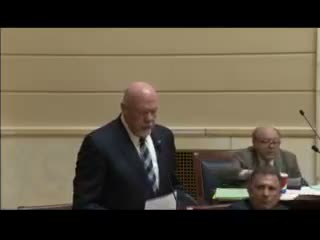
Senate advances SB38 after wide floor debate over charter school equalization
Summary
Senate Bill 38, which adjusts local replacement equalization to increase funding parity for charter school students, drew extended debate on the Senate floor over transition timing, district revenue losses and per-student gaps (sponsors cited roughly $553–$580). The Senate passed the measure and sent it to the House.
Senate Bill 38, a proposal to adjust equalization of local replacement funding so charter school students receive more comparable funding to district students, prompted extended floor debate before final passage.
Sponsor Senator Stevenson explained that the Charter School Task Force and interim work produced the bill—s recommendations and presented charts showing how equalization and local-replacement components change under the proposal. Senator Hilliard warned that allowing a sunset on an existing differential could cause charter schools to "lose about 7 and a half million dollars," a point debated on the floor. Senators referenced an agreed working estimate for the per-student gap in funding used in negotiations (figures discussed in the hearing ranged from about $553 to $580 per student).
Several senators asked why the Senate was moving the bill to the House before the body had finalized certain technical amendments. Opponents urged the Senate to perfect amendments on this floor rather than relying on the House to make corrections; supporters replied that sending a bill the House could adjust gives the lower chamber ownership and that increased equalization in other parts of the formula would offset district losses on net.
Senators raised three issues they said should be addressed in follow-up: a recreation adjustment, a transition/timing adjustment to avoid sudden financial pressure on districts, and clearer property-tax notice language so taxpayers can see when charter funding is reflected. Several senators said they would support the bill if those changes were written and agreed to in the House.
After explanations and roll-call statements by multiple senators on both sides of the question, the Senate recorded the passage of SB38 and sent it to the House for their consideration. Floor-recorded vote tallies in the transcript indicate a divided vote; senators described both the moral imperative to treat all students equally and the concern about imposing rapid financial changes on some districts.
The bill now proceeds to the House, where several senators said they expect further amendment work to resolve the technical adjustments discussed on the Senate floor.