Get Full Government Meeting Transcripts, Videos, & Alerts Forever!
Get email alerts on the Employment Reentry topic
No spam. Unsubscribe anytime.
Senate advances measure to delay criminal-conviction questions until interview for some public-employer applicants
Summary
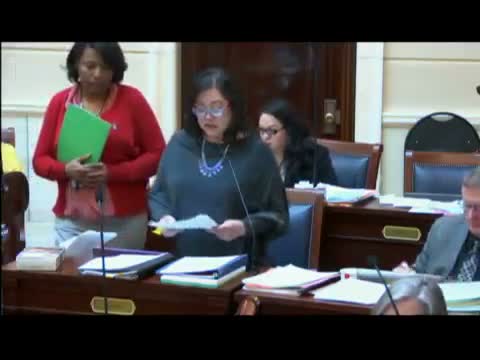
Senate debate and passage of a bill amendment that prevents public employers from requiring applicants to disclose past criminal convictions on initial application forms in many positions; sponsors said the change helps applicants 'get in the door' and cited out-of-state case studies.
The Senate debated and passed an amendment and motion on a bill that prohibits many public employers from asking applicants to disclose past criminal convictions on the initial written application, while preserving the employer's ability to ask during an interview.
The sponsor (unnamed in the floor transcript segments) explained the change was intended to let qualified applicants with distant convictions secure interviews and explain rehabilitation. "It just gets them in the door," the sponsor said, citing examples and studies from Minneapolis and Durham County showing increased hiring of applicants with convictions after removing the early disclosure box.
Floor members asked whether the bill prevents employers from ever considering convictions; the sponsor said no — employers may still inquire at interview and consider conviction history in hiring decisions. Senators discussed a range of exemptions (law enforcement, certain child- and vulnerable-adult positions, Department of Alcohol Beverage Control, State Tax Commission, and roles requiring fiduciary duties) and the transcript records several colleagues expressing support for the policy as part of recidivism-reduction and workforce re-entry initiatives.
The Senate moved to suspend the three-reading requirement and passed the sponsor's motion to adopt the amendment and proceed; the bill will be sent to the House for further consideration.
Next steps: transmitted per standard concurrence/return procedures.