Get Full Government Meeting Transcripts, Videos, & Alerts Forever!
Get email alerts on the Licensing topic
No spam. Unsubscribe anytime.
Senate advances cosmetology licensing changes reducing training hours for hair services
Summary
The Senate passed House Bill 287 to lower required training for certain hair services to 1,200 hours and allow a single instructor license to cover multiple professions; sponsor Senator Weiler said the change targets barriers to licensure and removes training specific to nails and aesthetics.
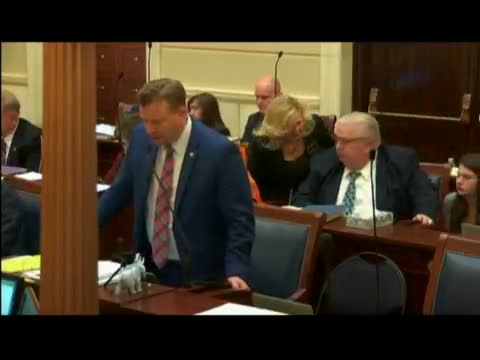
House Bill 287 received floor consideration March 9, with Senator Weiler presenting the measure as a targeted reduction of licensure barriers in cosmetology and related fields.
Weiler said Utah previously reduced a 2,000‑hour requirement to 1,600 hours as part of past changes and that HB 287 narrows training for hair services to 1,200 hours. The bill also removes training categories that were limited to nails and aesthetics and would allow an instructor who holds a current professional license to teach across the professions covered by the section with a single instructor license.
“Several years ago, Utah required 2,000 hours to become licensed as a cosmetologist…we are now lowering it to 1,200 hours with this bill for hair services only,” Weiler said. He added he would answer any questions and that the changes aim to reduce barriers to entering the profession.
The sponsor moved to suspend the three‑reading requirement and to pass HB 287 under suspension of the rules. The motion carried and the measure was recorded as passed on the floor; the transcript shows floor roll‑call activity in the passage sequence. The bill was sent on for enrollment and any further signatures required by chamber procedure.
Because the recorded rollcall language in the transcript is fragmentary, the floor action is characterized here as passage under suspension of the rules with outcome recorded on the Senate floor; full roll‑call tallies are preserved in the official Senate journal and the enrolled bill packet.