Get Full Government Meeting Transcripts, Videos, & Alerts Forever!
Get email alerts on the School Restraint Policy topic
No spam. Unsubscribe anytime.
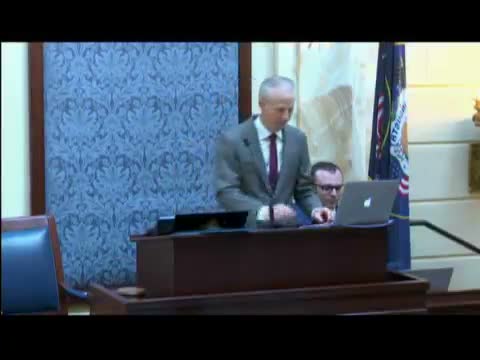
Senate debates HB92 to limit physical restraint in schools; sponsor says bill protects students and exempts school resource officers
Summary
Senator Vickers told the chamber HB92 would narrow the definition of physical restraint, remove outdated corporal-punishment language and protect students and staff by limiting dangerous immobilizing holds; senators asked technical questions about definitions for specific student ages and disability accommodations.
Senator Vickers presented House Bill 92 as a targeted change to how schools may use physical restraint. He said the bill clarifies what constitutes physical restraint — ‘‘a hold that immobilizes a child and puts the child at risk of injury or death’’ — removes an antiquated corporal-punishment allowance and seeks to reduce incidents when a student oes not present a safety risk.
Vickers emphasized that the bill does not change exemptions for police officers or school resource officers, explaining that those officers have professional training. He said the State Board of Education, the disability law center, the PTA and other groups had been part of vetting the bill and that training requirements for staff would remain important.
During floor questioning a senator asked whether the bill efinition of "student" — which appears in the draft text to cover certain ages — would include seniors who turn 18 during the school year. Vickers said he had not examined that angle in detail and would provide an answer later, and suggested such a question might be resolved in the third-reading process.
Sponsor motioned to read the bill a third time and proceed; senators proceeded with the procedural steps necessary to advance the measure on the reading calendar.
What happens next: sponsors said they would provide follow-up clarifications on statutory definitions (including student age ranges and disability-specific considerations) as the bill moved toward final passage.