Get Full Government Meeting Transcripts, Videos, & Alerts Forever!
Get email alerts on the Privacy Prescription Database topic
No spam. Unsubscribe anytime.
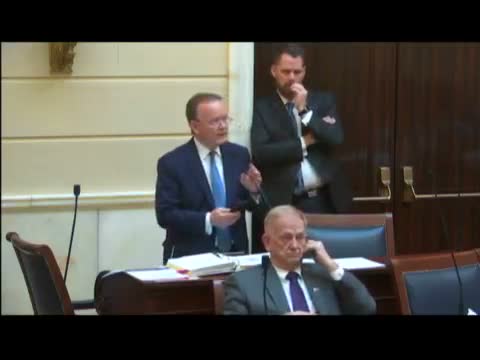
Senate Rejects Bill Easing Law‑enforcement Access to Prescription Database After Heated Privacy Debate
Summary
After lengthy debate on privacy, past abuses and law‑enforcement needs tied to the opioid crisis, the Senate failed to pass the first substitute of House Bill 260 on controlled‑substance database access (9 yeas, 18 nays, 2 absent).
The Utah State Senate on March 5 declined to pass a substitute to House Bill 260 that would have modified law-enforcement access to the state’s controlled-substance prescription database.
Sponsor Senator Adams and other supporters said the change was intended to help investigators address the opioid crisis by enabling trained officers to query the database on a limited basis. Opponents pointed to well-documented abuses in earlier years, when improper searches of the prescription database exposed private medical information.
Senator Wyler, recounting earlier abuses, warned that “people’s lives were ruined” by improper access and urged caution. Senator Weiler, who offered an amendment that would have raised education and experience thresholds and required supervisory review, argued the amendment sought to align state practice with federal Drug Enforcement Administration procedures; that amendment failed on the floor. Multiple senators pushed back that the amendment would penalize experienced non‑college law‑enforcement officers and reduce investigators’ ability to act quickly.
The first-substitute bill failed on final passage; the clerk reported a tally of 9 yeas, 18 nays and 2 absent. Senate leaders announced the measure would be returned to the House following the negative vote.
What was at stake: Senators framed the vote as a tension between privacy (protecting medical records and preventing misuse) and enforcement (faster access could aid investigations into illegal prescribing and diversion). The transcript shows repeated references to prior abuses, the Fourth Amendment standard, and federal court rulings that shaped the legal backdrop.
Next steps: The Senate’s failure to approve the substitute returns the bill to the House for reconsideration or further amendment.