Get Full Government Meeting Transcripts, Videos, & Alerts Forever!
Get email alerts on the Public Lands Grand Staircase topic
No spam. Unsubscribe anytime.
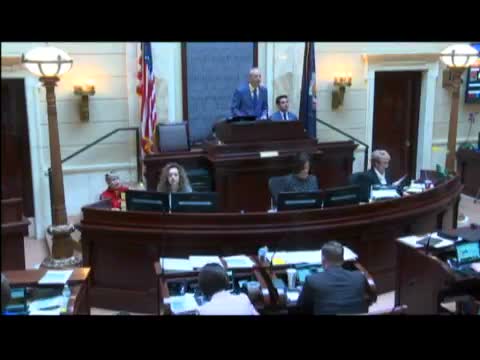
Senate backs resolution supporting a Grand Staircase–Escalante national park after floor debate
Summary
Senators debated SCR8, a resolution supporting a redesignation of parts of Grand Staircase–Escalante and creating a new national park. Sponsors argued for local control and economic benefits; critics warned about acreage reductions and long‑term stewardship. The resolution passed on a roll‑call (22–3).
Senator O'Kerlund presented SCR8, a concurrent resolution supporting local‑led management and a redesignation that would create smaller national monuments and a new national park from portions of the former Grand Staircase–Escalante monument. "The purpose of the Grand Staircase–Escalante National Park and Preserve...shall be to protect, conserve, and enhance the unique and nationally important historic, scenic, and natural resources," the sponsor said, urging local input and a management committee model.
Supporters said a tailored national park would protect key canyons and features while potentially bringing economic benefits to communities such as Escalante and Boulder. Opponents raised questions about the reduction in protected acreage after prior federal actions and the long‑term effects of allowing development or resource extraction on lands nearby. Senator Backus warned that a reduction from earlier protections to a much smaller park footprint could cause future generations to judge the legislature harshly.
The Senate debated acreage, federal versus state roles, and whether the redesignation preserves public access and historic resources. After floor discussion and roll‑call, SCR8 was read a third time and recorded as receiving 22 yay votes and 3 nay votes with 4 absent; the measure advanced as read.
The floor exchange highlighted competing priorities: conservation and local economic development versus concerns about reduced acreage and potential resource exploitation. The resolution itself is a statement of legislative support for a design change; any legal status change would proceed through federal processes.