Get Full Government Meeting Transcripts, Videos, & Alerts Forever!
Get email alerts on the Legislation Floor Session topic
No spam. Unsubscribe anytime.
Senate advances and passes multiple bills; several measures recorded with unanimous or strong majorities
Summary
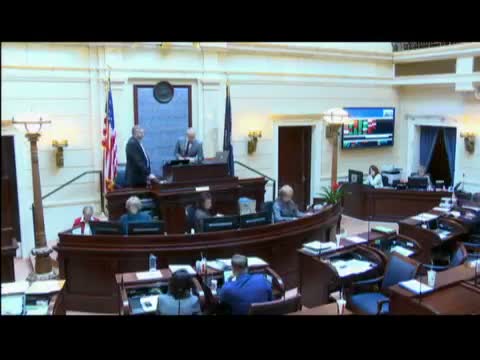
On Day 36 the Utah Senate adopted committee reports and moved multiple bills forward or read them for a third time. Notable roll-call results included unanimous or near-unanimous support for education and tax measures; several bills advanced to the House or were read for a third time.
The Utah Senate, convening for its 36th day of the session, adopted a slate of committee reports and advanced a series of bills across multiple policy areas, including education, taxation and public safety.
Clerks reported communications from the House and several standing committees, and senators moved to adopt committee recommendations before the chamber considered individual bills. The Senate recorded formal passage or third‑reading referrals on a number of measures, with several recorded tallies noted on the floor.
Bills and outcomes recorded or announced on the floor included: Senate Bill 186 (education reporting amendments) — reported as receiving 28 yes votes and sent to the House; First substitute Senate Bill 193 — recorded as receiving 26 yes votes; Senate Bill 209 (budget/federal‑funds process change) — recorded with 26 yes votes; Senate Bill 230 (solicitation/other public-safety matters) — recorded with 25 yes votes for third reading; and Senate Bill 235 (assault and threat of violence amendments) — recorded as receiving 26 yes votes with one nay and two absences. Several measures were moved on the consent calendar and carried by voice vote when no nays were heard, including veterans’ tax timing changes and a constitutional amendment proposal on active‑duty property tax exemption.
Senators also circled (set aside for later) a number of bills for amendment work or further negotiation, a routine procedural step for bills under active amendment. Committees reported favorable recommendations on transportation, education and workforce matters; several bills were placed on consent or pushed to the second reading calendar.
The Senate recessed for caucus and committee work following the series of votes; the floor work continued into afternoon and evening sessions as scheduled.