Get Full Government Meeting Transcripts, Videos, & Alerts Forever!
Get email alerts on the Medicaid Block Grant topic
No spam. Unsubscribe anytime.
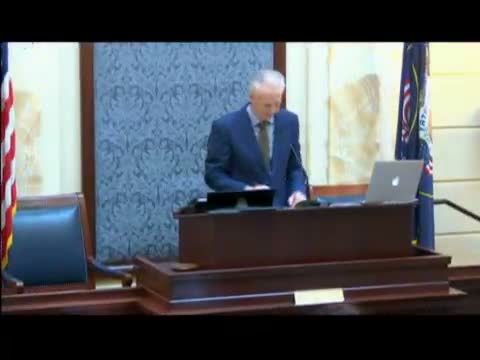
Senate debates resolution urging federal Medicaid block grant; floor splits over risks to vulnerable populations
Summary
Senators debated SCR 8, a concurrent resolution asking the federal government to provide Medicaid funding as a block grant so Utah can redesign and manage Medicaid locally. Supporters argued for state flexibility; opponents warned block grants historically underfund programs and could harm children and people with disabilities.
Senator Hemmert introduced first substitute SCR 8, a concurrent resolution asking the federal government to provide Medicaid funding through a block grant so states could redesign Medicaid and exercise more local control. "This is a request that the federal government give the state of Utah its money," Hemmert said, framing the measure as a federalism argument and a response to federal program complexity.
Opponents on the floor raised practical concerns about rate-setting and adequacy. "I have some real concern about adopting a block grant program," said Senator Davis, noting that block grants historically have not maintained the funding levels needed to run entitlement programs and expressing worry about growth projections and the coverage of newly eligible populations. Senator Escamilla warned that "the largest group of recipients in Medicaid are children," and urged vigilance to ensure the poorest and most vulnerable, including children and people with severe disabilities, would not be left behind under any change.
Supporters countered that block grants could give Utah more control over how federal dollars are spent. "There’s nothing magical about the federal government except for their ability to print money," Senator Anderegg said, arguing the state could tailor spending to local priorities.
The sponsor acknowledged the complexities and said the substitute addressed concerns raised by the Utah Department of Health and committee members. After floor debate the Republican majority called for a third reading and a roll-call vote. The transcript shows the roll call was initiated, with senators recorded answering during the call, but the captured portion of the record does not include a final recorded tally or a formal announcement of the adopted outcome in the available excerpt.
Because SCR 8 is a concurrent resolution, it is a nonbinding message to the federal delegation rather than a change in state statute or entitlement rules; any federal change would require federal legislation or administrative action. The Senate discussion focused on trade-offs between state flexibility and the risk that a fixed block grant could fail to keep pace with rising need.
The resolution’s immediate next step on the Senate floor was the roll-call taken for third reading; the transcript excerpt does not show an explicit final result or transmission beyond that vote call.