Get Full Government Meeting Transcripts, Videos, & Alerts Forever!
Get email alerts on the Legislation topic
No spam. Unsubscribe anytime.
Senate advances a large slate of bills including receivership rules, open-meeting minutes changes and public-safety education reimbursements
Summary
On Feb. 24 the Utah Senate moved a wide set of bills — including technical corrections to district lines, receivership rules, open‑meetings minutes posting reforms, metro‑township and public‑safety education reimbursement measures — many passed by recorded roll-call votes and were sent to the House for further action.
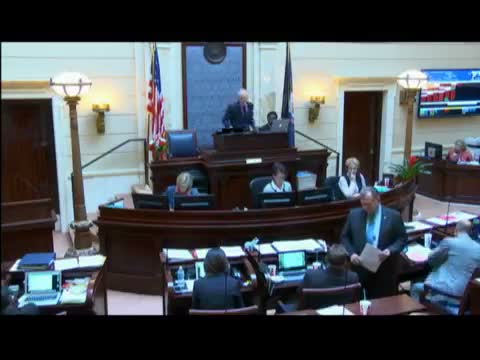
The Utah State Senate spent much of its Feb. 24 floor session advancing a broad slate of legislation on a largely bipartisan basis, passing technical corrections, policy cleanups and several substantive measures on the consent or third‑reading calendars.
Actions recorded on the floor included: First Substitute Senate Bill 112 (concurrence and passage; recorded as passing and sent to the House), Senate Bill 208 (Uniform Commercial Real Estate Receivership Act — described as a multi‑year product to clarify receivership law; the bill passed on third reading with 27 yeas, 0 nays and 2 absent), Second Substitute Senate Bill 138 (Metro Township Amendments, passed 27‑0 with 2 absent), First Substitute Senate Bill 97 as amended (open‑meetings/minutes posting clarifications, passed 24‑0 with 5 absent) and First Substitute Senate Bill 165 (restructured scholarship to a reimbursement program for public‑safety officers, advanced to third reading with recorded support of 23‑0 and 6 absent).
Other consent and concurrence items reported included multiple House bills transmitted to the Senate (on topics from opioid prescribing to voter registration amendments) that were read for the first time and referred to Rules. The Senate also considered a number of technical corrections — for example, House Bill 158 to align a House district census block with an adjusted county line — and passed several education‑related statutory name updates (House Bill 126, student plan terminology updates).
Floor sponsors frequently described bills as either technical corrections or as cleanup measures aimed at clarifying existing practice. Several sponsors emphasized transparency and local control: for example, the amendment to SB97 clarifies where approved minutes and public materials must be posted and ensures physical access to approved records at a public body’s primary office.
Most measures passed with strong recorded majorities and were ordered sent to the House for concurrence or signature as appropriate. The Senate recessed until 2 p.m. following announcements about campus and caucus events.