Get Full Government Meeting Transcripts, Videos, & Alerts Forever!
Get email alerts on the Mental Health Crisis Services topic
No spam. Unsubscribe anytime.
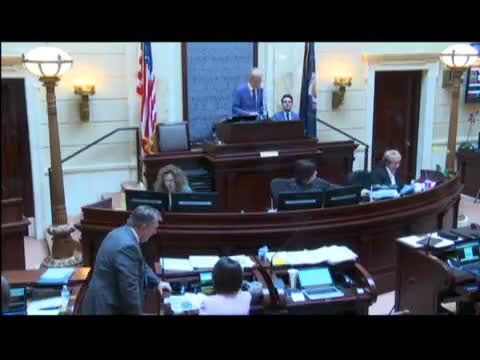
Senate clears Medicaid waiver for statewide mental‑health crisis services; related crisis‑line bill tabled for budget work
Summary
The Utah Senate on the morning calendar advanced a Medicaid waiver (House Bill 42) to fund statewide crisis intervention services and acknowledged broader reforms in House Bill 41, which was tabled on third reading for fiscal review. Sponsors said the measures will centralize crisis calls and route them to trained clinicians rather than dispatchers.
Senator Sarah Thatcher urged the Senate to approve a Medicaid waiver to support statewide mental‑health crisis services, saying the package consolidates 24‑hour crisis‑line functions and routes callers to trained clinicians. "Under this bill, any call for help anywhere in the state of Utah will be answered by a live LCSW at the University of Utah's Neuropsychiatric Institute," Thatcher said during her presentation.
The waiver measure, House Bill 42, was presented as the funding component of a broader effort recommended by the statewide Suicide Intervention Commission. Thatcher told senators the approach is designed to prevent crisis calls from landing at police dispatch centers and to ensure callers reach professionals "trained to save lives." She cited teenage suicide statistics and testimony from mental‑health advocates in the gallery in support of the reforms.
After no substantive questions, the Senate held a roll‑call vote and recorded that House Bill 42 "received 27 yay votes, 1 nay vote, 1 being absent," and proceeded with third reading and passage in the Senate.
A companion measure, House Bill 41, which would formally establish a statewide crisis line and consolidate crisis‑intervention operations, was advanced toward third reading during the same floor session but was temporarily tabled on third reading so budget and fiscal impacts can be finalized. Senate floor comments noted the bills have fiscal implications that must be resolved in the budget process before full implementation.
Supporters emphasized the SafeUT app and local partners who helped design the crisis system, and the Senate read a commendation recognizing the work of the Mental Health Crisis Line Commission and SAFE UT partners. Opponents or concerns were procedural: senators acknowledged the need for appropriations and detailed fiscal analysis before committing to operational changes.
The Senate left the next procedural steps to the budget process; HB42 passed the Senate and will be transmitted to the House as appropriate, while HB41 remains tabled on third pending fiscal action.