Get Full Government Meeting Transcripts, Videos, & Alerts Forever!
Get email alerts on the Education Policy topic
No spam. Unsubscribe anytime.
Senate approves tougher school bullying definition, requires updated local policies and parental acknowledgment
Summary
The Senate passed a substitute to SB 161 to revise statutory bullying and cyberbullying definitions, require school boards to update policies and obtain annual parent/student/employee acknowledgments, and mandate limited reporting to the State Board of Education.
Senators voted to advance the first substitute to SB 161, which cleans up Utah’s statutory definition of bullying and cyberbullying, requires school boards (including charters) to update local policies and asks schools to obtain annual acknowledgments from parents, students and school employees.
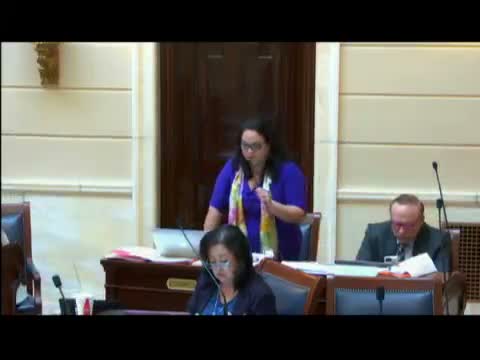
Sponsor Senator Escamilla said the substitute aligns earlier definitions and adds a ‘‘reasonable person’’ test and parental‑involvement requirements. He said the change is intended to focus schools’ responses on intentional written, verbal or physical acts that a reasonable person would foresee as causing physical or emotional harm.
Opponents on the floor questioned whether the language was too broad. Senator Dayton said he would vote no because he worried the new definition could sweep in ordinary childhood disputes and leave educators and parents uncertain about when to intervene. Supporters, including Senators Thatcher and Davis, argued that the update is necessary to ensure policies exist and to address links between bullying and youth suicide, and noted that the State Board of Education and school‑district groups worked on the language.
On the final roll call the clerk announced 22 yea, 6 nay, 1 absent; the substitute will be read a third time for further action.
What happens next: The bill advances to third reading and, if passed, would require local districts to update policies and reporting procedures under the revised statutory definition.