Get Full Government Meeting Transcripts, Videos, & Alerts Forever!
Get email alerts on the Floor Votes topic
No spam. Unsubscribe anytime.
Senate Advances Wide Consent Calendar, Moves Health, Medicaid and Liability Bills
Summary
The Utah Senate’s morning session advanced a long consent calendar and moved several policy bills, including a Medicaid housing coordinator (S.B. 88) and legislation to route catastrophic injury claims to the legislature for special‑master review. Multiple bills were read three times and sent to the House for consideration.
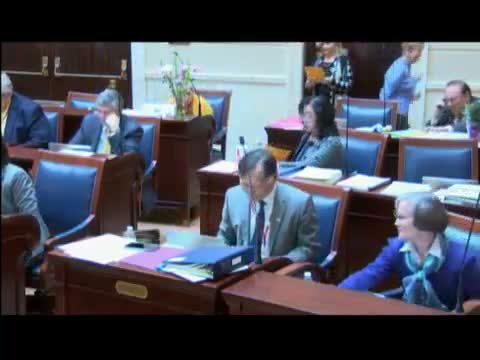
The Utah Senate used the morning floor session to take up a mix of consent and policy items, approving numerous bills and advancing several measures for further action. The session included brief presentations, roll-call votes and unanimous consent for multiple items on the consent calendar.
On the consent calendar and by committee report the Senate advanced or passed numerous bills, including: S.B. 45 (retail waterline disclosure amendment), S.B. 48 (nurse licensure compact), S.B. 67 (hunting mentor program), second substitute S.B. 69 (notification requirements for ballot proposals), and many House bills that were transmitted for Senate consideration. The rules committee assigned a wide slate of bills to standing committees.
Policy items discussed and advanced during the morning included S.B. 88, which would create a Medicaid housing coordinator to help keep people with disabilities and older adults in independent housing rather than more expensive assisted-living placements. Sponsor Senator Iwamoto said a coordinator could reduce net costs by helping individuals remain appropriately housed while coordinating services.
Another discussed measure would change how catastrophic personal-injury claims that exceed statutory caps are reviewed. The sponsor described a process by which the Executive Appropriations Committee (EAC) could request a special master or panel to produce evidence and recommendations for the legislature on whether to approve additional compensation; the bill also modifies the indexing formula used to adjust caps and contains provisions for optional use of the general fund reserve in extraordinary cases.
A number of labor, education, and health bills were also advanced by roll-call (examples: S.B. 63 — nonprofit corporation/water companies; S.B. 104 — Labor Commission enforcement amendments; S.B. 123 — state developmental center dental clinic). Several presented bills were moved 'to third' or sent to the House after recorded votes or unanimous consent.
The Senate recessed until 2:00 p.m. after completing the morning’s business and making committee-transfer agreements on a small number of bills (for example, S.B. 222 moved to Business and Labor from Transportation).