Get Full Government Meeting Transcripts, Videos, & Alerts Forever!
Get email alerts on the Appointments topic
No spam. Unsubscribe anytime.
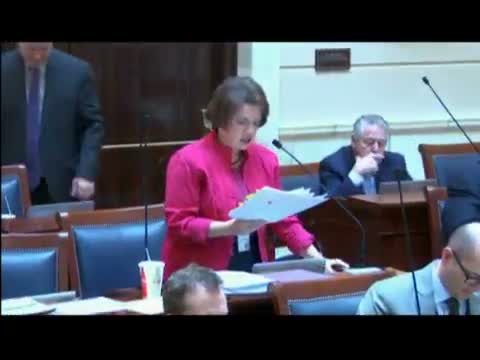
Senate Debate Narrows on House Bill 11 Over Board Appointments; Bill Advances
Summary
After extended floor debate, the Utah Senate advanced House Bill 11, which removes statutory party- and (in some cases) geographic-based appointment requirements for certain executive-branch boards and commissions. Supporters said the change emphasizes expertise; opponents warned it could reduce political and regional representation.
House Bill 11, a measure to remove explicit statutory requirements about political affiliation (and in some instances geographic representation) for appointments to state executive-branch boards and commissions, drew sustained floor debate before the Senate advanced the bill.
Senator Dayton, the bill sponsor, framed the measure as prioritizing expertise over party labels. Dayton said the change would allow qualified volunteers and subject-matter experts to serve without a requirement that an appointee declare or be chosen by party. Opponents pushed back that eliminating those statutory considerations could reduce plurality of viewpoints on important bodies.
Senator Dabakis warned the change could narrow the range of perspectives on boards and commissions, saying, “This exclusionary bill … excludes a lot of political thought from our state boards and commissions.” Dabakis and other critics argued some boards address politically sensitive public policy and that explicit diversity requirements help ensure balanced decision-making.
Supporters responded that many boards already require specific professional credentials (for example, a licensed physician or engineer on technical boards) and that qualifying by expertise does not inherently exclude unaffiliated or minority-party voices. During debate Senator DeBackus said, in explaining an affirmative vote, “This is inclusionary. It’s inclusionary,” summarizing support for assessing competence rather than party.
Senators discussed technical and substantive amendments on the floor (including a posted technical amendment) and questioned how the changes would affect the roughly 28 boards the bill targeted. Questions from the floor sought details about which boards currently include geographic requirements and how removing those lines would change appointment patterns.
Following the debate and motions to adopt committee changes, the Senate moved the measure forward according to the regular legislative process. The bill will proceed to the next step as recorded on the floor.
The Senate’s deliberations showcased a familiar tension in appointments law: whether statute should explicitly require partisan or regional balance to guarantee representational diversity, or whether relying on an appointing authority’s discretion to select the most qualified candidates better serves state government needs. The floor record shows both arguments were aired at length; the bill was advanced by the Senate at the close of the morning session.