Get Full Government Meeting Transcripts, Videos, & Alerts Forever!
Get email alerts on the Public Lands topic
No spam. Unsubscribe anytime.
Utah Senate urges Congress to consider shrinking Grand Staircase‑Escalante; resolution passes after heated debate
Summary
The Utah Senate passed a concurrent resolution asking the state's congressional delegation to consider reducing or modifying the boundaries of the Grand Staircase‑Escalante National Monument, after extended debate over local control, economic impacts and federal designation processes.
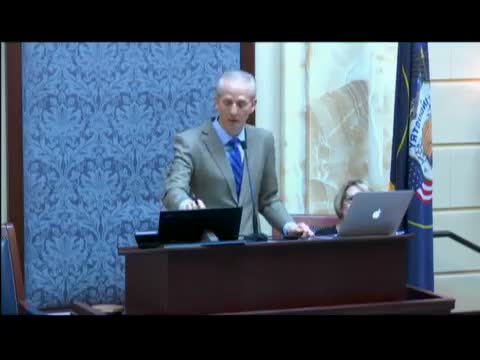
The Utah Senate on the 17th day of its session passed House Concurrent Resolution 12, a message resolution urging the state's congressional delegation to consider reducing or modifying the boundaries of the Grand Staircase‑Escalante National Monument.
Sponsor Senator Okerlund said the resolution calls for Congress to ‘‘reduce or modify boundaries of the Grand Staircase Escalante National Monument’’ and to ‘‘consider action to reduce or modify boundaries … to a minimum area necessary to protect the antiquities identified in the presidential proclamation.’’ He noted the monument covers 1,880,461 acres and said local officials and residents deserve a seat at the table when decisions affecting access, commerce and land uses are made.
Opponents and skeptics challenged the premise that the designation has been uniformly harmful. One senator cited data showing the monument area and nearby counties experienced growth after designation: "From 1996 to 2008, population grew by 8%, jobs grew by 38%, real personal income grew by 40%," a lawmaker summarized during debate. Senator Dabakis said he opposed the resolution, concluding plainly, "II'm gonna vote against this."
Debate focused on competing claims: sponsors argued the designation was imposed by presidential proclamation without sufficient local input and has left some rural counties with unfunded responsibilities and constrained economic options; critics called for a more measured approach and questioned whether boundary changes would deliver the economic benefits proponents describe. Several senators urged negotiation with federal officials rather than confrontation.
Under suspension of the rules, the Senate moved HCR 12 to final passage and held a roll‑call vote. The transcript records multiple senators announcing affirmative votes; a complete numeric tally is not specified in the record provided. The resolution is a message to Congress and does not itself change land management; it requests federal legislative or administrative action.
The resolution also asks Garfield and Kane counties to consult with the Bureau of Land Management to map a minimum acreage necessary to protect identified antiquities, and invites stakeholder participation in that process. The Senate moved the measure forward as a state-level statement urging congressional consideration.
Next steps: HCR 12 is a nonbinding request to the federal delegation; any change to monument boundaries would require congressional or presidential action at the federal level.