Get Full Government Meeting Transcripts, Videos, & Alerts Forever!
Get email alerts on the Auditor Authority topic
No spam. Unsubscribe anytime.
Senate concurs in House changes to auditing bill, gives State Auditor limited authority to seek account freezes
Summary
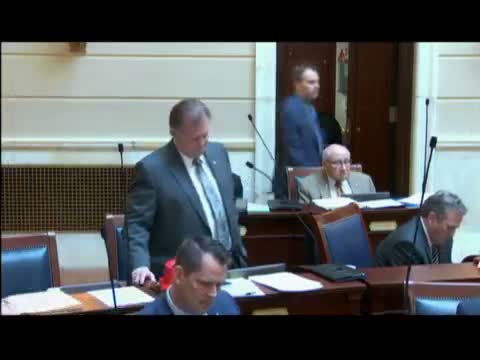
The Utah Senate, under suspension of the rules, concurred with House amendments to first substitute Senate Bill 137 and passed it with an immediate-effective-date provision that would allow the State Auditor to seek temporary judicial freezes of accounts when audits reveal serious questions about funds. The measure was reported passed and will be sent to the House/Speaker for signature.
Senator Bramble, sponsor of first substitute Senate Bill 137, told the Senate the House made two amendments to the bill that change auditing thresholds when a nonprofit receives grant funds and add a temporary, judicial-account-freeze mechanism for the State Auditor when audits uncover serious questions about assets. "During the course of this bill, it turns out that the auditor has been doing a great deal of work, ferreting out financial anomalies ... and he came to us and asked if he could have authority to freeze accounts if in the course of an audit they identify serious questions about the assets," Bramble said.
Bramble asked the Senate to suspend the rules so the chamber could concur in the House amendments and consider final passage immediately; under the immediate-effective-date language the bill would require a two-thirds vote to take effect upon the governor's signature. The Senate voted to suspend the rules, concur in the House changes and then passed final passage under suspension.
Senator Bramble said the temporary-freeze authority would operate through the courts: requests to freeze accounts would require judicial review and would not permit extrajudicial seizures. "This would still have to go to court for the request in the freezing," he said, and the provision includes judicial oversight.
Senate leaders reported the bill as having received 28 'aye' votes, 0 'nay' votes and 1 absence and said it would be sent to the Speaker for signature and then on to the governor per usual processing. The chamber's action moves the measure forward with the House's technical and substantive amendments intact; because the bill includes an immediate effective date, it will require a two-thirds legislative vote to become effective immediately if signed by the governor.
The bill alters thresholds for audited reports tied to nonprofit grant receipts and adds an auditor tool the sponsor characterized as narrowly circumscribed and subject to judicial checks. The text adopted in the House places limits and requires court involvement before any freeze can be imposed.
Next steps: the enrolled bill will be transmitted to the House/Speaker and, if the governor signs it and the two-thirds threshold is met in both houses for immediate effect, the auditor provision could take effect sooner than standard statute changes.