Get Full Government Meeting Transcripts, Videos, & Alerts Forever!
Get email alerts on the Senate Votes Roundup topic
No spam. Unsubscribe anytime.
Utah Senate advances dozens of bills; child-protection pilot and several licensing, safety and privacy measures pass
Summary
On Day 23 the Utah Senate recognized Art Day, heard committee reports and moved a slate of bills to passage or House consideration, including a child-protection pilot with Sandy City, school-bus inspection revisions, occupational-licensing fixes and student-privacy training requirements. A motion to reconsider the Medicaid housing coordinator bill generated personal testimony.
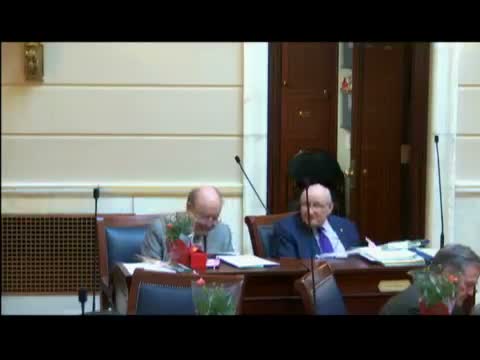
The Utah Senate convened Feb. 14 and completed a packed morning of ceremonial remarks, committee reports and votes on multiple bills. Lawmakers recognized Art Day and presented scholarships to 27 high school artists before turning to committee reports and a sequence of bills placed on the consent and third‑reading calendars.
The chamber adopted standing committee reports and referred dozens of House and Senate measures to the appropriate panels for further work. On the third‑reading calendar, the Senate passed First Substitute Senate Bill 40, revisions to school bus inspection rules intended to clarify inspection frequency and who conducts inspections, by roll call (28 yea, 0 nay, 1 absent). Clerk announcements show multiple bills were read and transmitted to the House for its consideration after successful floor votes.
Senators approved a pilot program to formalize cooperation between the Division of Child and Family Services (DCFS) and Sandy City’s Child Protection Unit. The first substitute to Senate Bill 75 authorizes a pilot and—subject to funding—potential expansion to up to three other areas; supporters said the Sandy City model has improved investigations where children are victims and urged codifying a cooperative pilot relationship. The Senate moved the bill to the House for consideration after a recorded vote.
Other measures advanced included amendments to occupational and professional licensing statutes (Senate Bill 166 was presented as technical corrections and national‑standard alignment for a midwifery provision), rental amendments allowing awards of reasonable attorney fees in landlord‑tenant disputes (Senate Bill 52 recorded as passing with 26 yea, 0 nay), and a bill to increase school‑employee training on student privacy (Senate Bill 102). Lawmakers also debated and passed bills to study air‑ambulance billing and to modernize post‑conviction DNA testing standards, the latter changing the burden for reopening cases to a ‘‘reasonable probability’’ standard recommended by the sponsor and vetted with the attorney general’s office.
A motion to reconsider Senate Bill 80 (the Medicaid housing coordinator bill) prompted personal testimony from a long‑time staffer who described a constituent serving as a homeless advocate and argued a coordinator position would help system navigation and multiply services for people experiencing homelessness. The chamber took the reconsideration motion and recorded votes on the motion as it proceeded through the agenda.
The Senate also took up a substitute for legislation affecting a special license plate program and routing fees to the Cancer Research Fund; that substitute received recorded support and was read for third time. Multiple other bills were read a third time and sent to the House.
What happens next: Bills that passed the Senate will be transmitted to the House for its consideration; several measures remain in committee or circled for later action. The Rules Committee was scheduled to convene at noon to continue routine committee business.