Get Full Government Meeting Transcripts, Videos, & Alerts Forever!
Get email alerts on the Criminal Justice topic
No spam. Unsubscribe anytime.
Senate passes change to restitution enforcement for parolees, replacing automatic revocation with order-to-show-cause process
Summary
The Senate passed first substitute Senate Bill 71 to require an order to show cause when a parolee fails to make restitution payments within 90 days, shifting courts away from automatic parole revocation and aiming to distinguish willful nonpayment from inability to pay.
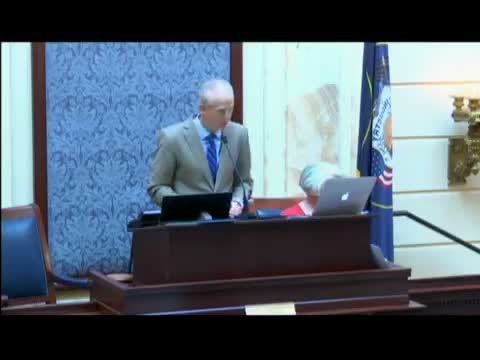
SALT LAKE CITY — The Utah Senate on the floor approved the first substitute of Senate Bill 71, a Sentencing Commission-backed measure that limits automatic parole revocation for failure to pay restitution.
Senator Thatcher, sponsor of the bill, told colleagues the bill is meant to prevent what he described as the ‘‘de facto debtor’s prison’’ effect when parolees are sent back to custody solely because they cannot afford restitution. Under the bill, a failure to make restitution within 90 days would trigger an order to show cause hearing to determine whether nonpayment was willful before reincarceration is considered.
"We actually find out whether or not this is willful disobedience or if this is just legitimately being unable to pay a debt," Thatcher said on the floor. He said the bill preserves restitution while creating a process to distinguish willful evasion from inability to pay.
Supporters framed the change as consistent with rehabilitation goals and avoiding unnecessary incarceration that undermines reentry. The motion to pass the bill carried on a roll-call vote; the clerk recorded 28 yea votes, 0 nay votes and 1 absence. The Senate directed the bill to the House for consideration.
The bill’s sponsor invited questions on the floor but did not amend the core requirement that an order to show cause be used prior to reincarceration for nonpayment within the 90-day window.
The next step is House consideration; the Senate clerk recorded the affirmative vote and the bill was transmitted to the House for its consideration.