Get Full Government Meeting Transcripts, Videos, & Alerts Forever!
Get email alerts on the Federalism topic
No spam. Unsubscribe anytime.
Visiting congressman urges stronger federalism, presses for limits on executive policymaking
Summary
A visiting congressman told the Utah Senate that restoring a balance between federal and state authority is essential, urged more specific statutory drafting and cited recent reversals of federal rules; senators asked about executive orders, town halls and Medicaid implications.
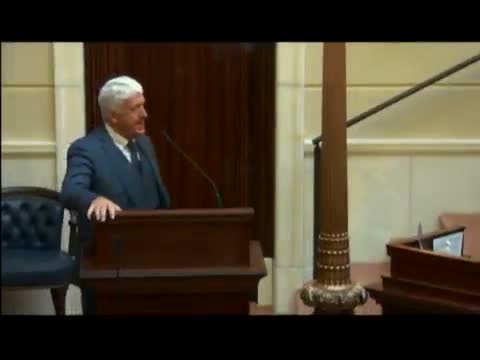
A visiting congressman addressed the Utah State Senate, arguing that restoring the balance of power between the federal executive branch and state legislatures is essential to good government. "If you quit inviting me here, I'll quit coming," he said at one point, opening a 20-minute exchange with senators.
The congressman emphasized federalism and criticized the growing use of broad executive actions to make policy. He said recent congressional and administrative moves had already reversed several rules and singled out one planning rule he said would have "totally eliminated the concept of state and local coordination." He praised efforts to give states additional tools — including House Joint Resolution 32 and a related House Concurrent Resolution — to signal concerns and seek change to federal rules.
Why it matters: the visitor framed the issue as both practical and constitutional, saying legislative specificity and public deliberation are required to prevent policy swings driven by executive fiat. He argued that members of Congress must stop drafting overly broad statutes and instead write specific statutory text so policy is clear and enforceable.
Senators pressed him on how the approach would affect specific programs, including Medicaid and proposals to convert federal funding to block grants. The congressman said he could not offer a definitive answer on changes to Medicaid financing formulas, telling senators, "I don't know how to give you a direct answer right now" when asked about 90/10 federal-state sharing and block grants. Several senators reiterated that Congress should pursue clearer statutory language and more legislative control over policy changes.
The visit included a wider discussion of constituent town halls and civility in public meetings. The congressman described recent town meetings in every county of his district as "very positive, very civil" and urged legislative processes that preserve opportunities for public input.
The session concluded the exchange without any formal action or commitment on pending federal health-financing proposals; senators thanked the guest for his report and the floor returned to routine business.