Get Full Government Meeting Transcripts, Videos, & Alerts Forever!
Get email alerts on the Education School Funding topic
No spam. Unsubscribe anytime.
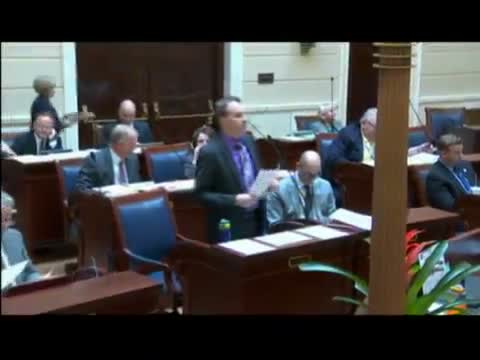
Senate passes SB80 to reallocate school property-tax yield in effort to boost funding equity
Summary
The Utah Senate passed Senate Bill 80 after floor debate, reallocating a portion of property-tax yield to districts with lower property tax capacity in an attempt to address funding inequities; senators debated impacts on small districts and audit provisions before the bill passed 20–8 with one absent.
The Utah Senate voted to advance Senate Bill 80, a measure sponsored by Senator Filmore aimed at reducing disparities in school funding created by differences in property-tax yield, after extensive floor debate and amendments.
Senator Filmore, the bill sponsor, said the measure targets ‘‘property tax yield inequities between school districts’’ and would allow the legislature to reallocate state education dollars so districts that cannot generate sufficient revenue from local property taxes receive additional support. ‘‘Because we created this problem, we need to solve that problem,’’ Filmore said during his floor presentation.
Why it matters: Filmore told senators that 70% of Utah students attend districts funded below the state average and called for a policy that helps property-tax disadvantaged districts compete for teacher salaries and services. Opponents warned the bill would reassign portions of annual increases and could leave some small or remote districts with smaller increases than they otherwise would have received.
What changed on the floor: Senator Davis offered an amendment directing the Legislative Auditor General to conduct an audit of the program to assess whether the changes equalized funding; after debate the chamber modified that language so the audit would be conducted ‘‘as prioritized by the audit subcommittee’’ and adopted the change. The sponsor and other senators emphasized they seek accountability and an opportunity to refine statutory language on third reading.
Key arguments: Senator Hilliard cautioned that the bill redistributes existing education dollars rather than adding new revenue and said some small districts could see smaller percentage gains in their Weighted Pupil Unit (WPU) than anticipated. ‘‘If we take 30% of it off to fund this program, 70% of 2.5 does not get you the 2.5 they need for the basic operations of their schools,’’ Hilliard said, arguing that smaller districts could be driven deeper into debt without protections.
Supporters responded that the bill targets property-tax yield inequity—not a general reallocation of the WPU—and that districts making significant local tax effort would be eligible for assistance. Senator Filmore noted other funding streams (such as necessarily small school funding and administrative enhancements) already affect overall distribution and defended the bill as a statewide policy correction.
Vote and next steps: After roll call and recorded explanations, the clerk announced Senate Bill 80 had received 20 yea votes, 8 nay votes and 1 absent; the Senate ordered the bill read for a third time. The bill advances in the legislative process for further action.
Clarifying details and open items: On the floor senators discussed WPU increase scenarios (for example 4% and 2.5% cases were used as illustrations), a revenue-distribution modeling worksheet citing about $15,000,000 in WPU full-dollar increases under certain assumptions, and informal estimates in the $120,000,000 range that were discussed in the course of debate. The transcript records a proposed audit deadline phrased as ‘‘on or before 11/01/2019’’ during debate; sponsors said they would work the exact statutory language before final enactment.
The Senate concluded its business and adjourned for the day; Senate Bill 80 will proceed to the next step in the process.