Get Full Government Meeting Transcripts, Videos, & Alerts Forever!
Get email alerts on the Civil Asset Forfeiture topic
No spam. Unsubscribe anytime.
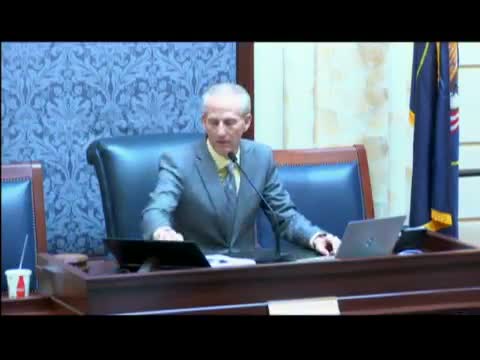
Senate debates civil asset forfeiture overhaul; sponsor moves amendment and asks for more work
Summary
Senator Thatcher outlined a civil asset forfeiture reform (SB87) proposing notice and procedural protections, expanded recovery of attorneys’ fees, and criminal-charge timeframes for low-value seizures; after questions about burden and timing, the Senate circled the bill for further work.
Senator Thatcher introduced Senate Bill 87, a package of civil asset forfeiture revisions, and described it as a collaborative product of law enforcement, prosecutors and civil-liberties advocates. Thatcher said the bill aims to 'raise the bar' for forfeiture by ensuring that property seized as potentially criminally connected is accompanied by clear instructions on how an owner can contest the seizure and by creating faster procedures to return property to innocent owners.
Thatcher moved Amendment No. 4 under his name, which — as explained on the floor — would require that individuals seized of property receive instructions at the time of seizure on how to petition for return, would create an early-resolution process allowing a prosecutor to return property without waiting for lengthy criminal prosecutions, and would expand the availability of attorneys’ fees for owners who successfully contest a seizure after participating in the early-resolution process.
Thatcher said the measure requires criminal charges for civil forfeiture proceedings in many cases and would impose a 60‑day deadline for charging in cases involving property valued under $10,000, while acknowledging larger cases (over $10,000) often involve multiagency investigations and need a different solution.
Senator Hemmert pressed the sponsor on whether the bill’s language creates a default that treats a prosecutor’s failure to respond as a denial rather than a presumption of return. Hemmert said he would prefer the rule be flipped so that failure to respond would produce a return of property rather than a denial. Thatcher replied that the bill’s incentives (including the prospect of full attorneys’ fees if prosecutors refuse early-resolution requests and later lose in court) should encourage prosecutors to act, and he asked that any drafting changes be considered by the working group that developed the bill.
After extended floor discussion and multiple senators requesting time to propose precise amendment language, Thatcher moved to 'circle' the bill until the next day to allow the item to be scheduled early on the next day’s calendar for fuller debate and working-group drafting. The motion to circle was agreed to by voice vote; the bill was not passed that day.
What this means: SB87 remains under active consideration. The sponsor and other senators signaled a willingness to refine language through the working group, particularly on default response rules and the handling of higher-value seizures. The bill’s next steps are additional drafting, possible amendment proposals, and renewed floor debate when it is taken up again.