Get Full Government Meeting Transcripts, Videos, & Alerts Forever!
Get email alerts on the Judiciary topic
No spam. Unsubscribe anytime.
Chief Justice Durrant urges funding for juvenile reform, highlights online access and court innovations
Summary
In a State of the Judiciary address, Chief Justice Durrant praised two decades of court modernization, urged funding to complete juvenile justice reforms tied to the Justice Reinvestment Initiative, and previewed initiatives including licensed paralegal practitioners and online dispute resolution.
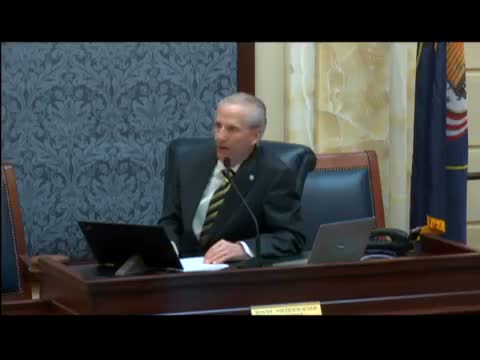
Chief Justice Durrant delivered the State of the Judiciary to the Utah Senate, outlining technological advances, expanded access programs and a funding plea tied to juvenile justice reform.
Durrant told senators the courts have shifted in the last 20 years from tradition-driven practice to an evidence-based model. "We're guided by research, data, and evidence about what works," he said, noting programs such as drug courts, mental health courts and the online court assistance program as examples of reforms that have moved from pilot projects to statewide practice.
He highlighted access gains for unrepresented parties, saying the court-based self-help center assisted more than 20,000 people last year and praising an online court assistance program that lets users file and access records remotely. Durrant also previewed two initiatives the courts are developing: licensed paralegal practitioners (LPPs), who would be specially trained and certified to provide limited legal services in areas with acute unmet need, and an online dispute-resolution system designed to allow small-claims matters to be handled fully on the Internet.
On juvenile justice, Durrant said the state has again focused on reform and urged the Legislature to ensure the proposals are adequately funded. "If the juvenile justice reform proposal cannot be adequately funded," he said, "the better course would be to defer it to next year so that the reforms can be matched to the resources." He framed the Justice Reinvestment Initiative as an evidence-based approach that substitutes treatment for incarceration in appropriate cases and warned that its success depends on matching services to reform goals.
Durrant also asked the Legislature to create a new district court judgeship in the Fifth Judicial District, citing sustained workload growth in the southwestern part of the state.
The address emphasized the judiciary's administrative advances as well: courts have moved to an electronic case management system (Chorus), posted performance metrics online, expanded mediation and self-help services, and shifted from court reporters to all-digital recording. "When operational later this year," he said of online dispute resolution, "this new process will allow citizens to evaluate, negotiate, and if necessary, litigate their small claims cases completely on the Internet."
Durrant closed by thanking long-serving court administrator Dan Becker on the occasion of his retirement and urged senators to consider the budget and statutory steps needed to sustain and build on the courts' reforms. The Senate received the address and returned to the day's business.