Get Full Government Meeting Transcripts, Videos, & Alerts Forever!
Get email alerts on the Judicial Appointment topic
No spam. Unsubscribe anytime.
Senate confirms Matthew Bell as Fifth District Court judge
Summary
The Utah Senate unanimously confirmed Matthew Bell to the Fifth District Court on Oct. 18, 2017, voting 23-0 with six senators absent. Bell, an assistant U.S. attorney and law instructor, pledged to 'diligently execute' his judicial duties.
The Utah State Senate confirmed Matthew Bell as a judge of the Fifth District Court on Oct. 18, 2017, by a recorded vote of 23-0 with six senators absent. The confirmation followed a unanimous recommendation from the Senate Judicial Confirmation Committee.
Committee chair Todd Wyler told the chamber the committee had thoroughly reviewed Bell’s background and found no disqualifying concerns; he moved that the Senate confirm Bell. The governor’s communication transmitting the appointment said the nomination was made by Governor Gary R. Herbert and noted the committee’s favorable report.
Bell has served as an assistant U.S. attorney in St. George and prosecuted federal cases including drug, gun, immigration and child-exploitation offenses, the committee reported. He also has taught criminal law and procedure at Dixie State University (referred to in the record as 'Post and Dixie State University').
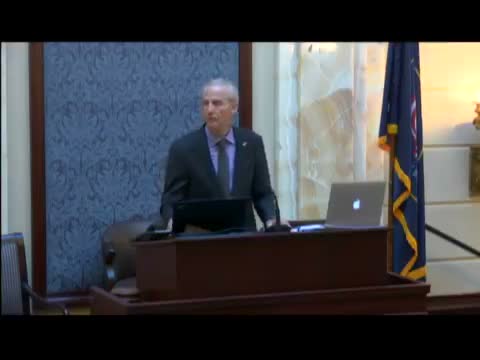
After the vote, Bell introduced family members in the gallery and thanked the governor, the judicial nominating committee and the Senate committee that reviewed his nomination. "I will diligently execute my judicial duties," Bell said. "That I will, do so with civility, with integrity, and with fidelity to the rule of law."
The Senate’s action completes the executive and committee stages of the appointment process described in the governor’s proclamation and the certificate filed with the Senate. The chamber directed its committee to notify the governor's representative that business was concluded, and then adjourned the extraordinary session.