Get Full Government Meeting Transcripts, Videos, & Alerts Forever!
Get email alerts on the Operation Rio Grande topic
No spam. Unsubscribe anytime.
Senate approves short-term transfer to fund Operation Rio Grande
Summary
The Utah Senate passed a first-substitute bill transferring unused corrections funds to the General Fund to support Operation Rio Grande and authorized the Department of Workforce Services to administer funding through January 2018; fiscal reporting to analysts and the governor's budget office is required one week before transfers.
Senate President Scott K. Niederhauser announced that the Senate passed first substitute House Bill 1001, a short-term funding measure to support Operation Rio Grande.
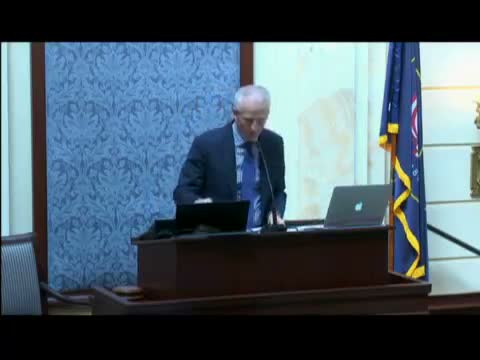
The bill, presented in the Senate by Senator Andrig, authorizes the transfer of unused, nonlapsing balances from the corrections jail contracting account into the General Fund and permits the Department of Workforce Services to fund Operation Rio Grande through January 2018. "It authorizes division Department of Workforce Services to fund Operation Rio Grande through January of 2018," Andrig said in his remarks to the chamber.
Sponsor remarks and subsequent questions emphasized that the funding is a first-phase, short-term step. Andrig told the Senate the bill includes a reporting requirement: fiscal analysts and the governor's office of management and budget will receive an accounting of transfers and expenditures one week before transfers are executed. "We will come back to discuss potential further funding for this" when the general session begins, he said.
During debate, Senator Hilliard sought to clarify the dollar amounts and source of the funds. "It's 4,900,000.0. It's not 65,000,000," Hilliard said, noting that the money came from an appropriation that was not used and is nonlapsing. He urged caution about assuming large discretionary sums are available for further spending and framed Rio Grande as a statewide issue, not only a Salt Lake City matter.
Other senators debated the program's scope and the balance between treatment and criminal responses for people at Rio Grande. The sponsor and supporters characterized the funding as a necessary, limited step to provide law enforcement and services while longer-term decisions and vetting occur during the general session.
Under suspension of the rules, the Senate voted to pass the bill; the President announced it had received the necessary votes and directed that the measure be sent to the House for the Speaker's signature. The bill now returns to the House under the special session transmission process.