Get Full Government Meeting Transcripts, Videos, & Alerts Forever!
Get email alerts on the Tax Policy topic
No spam. Unsubscribe anytime.
Senate debates pre‑allocating remote‑sales revenue, votes to trigger manufacturing exemption
Summary
Senators debated a first substitute that would trigger a manufacturing sales-tax exemption if remote‑sales revenues arrive, with sponsor prioritizing manufacturing competitiveness and opponents urging the Legislature to keep incoming remote‑sales tax revenue in a lockbox until allocations can be decided.
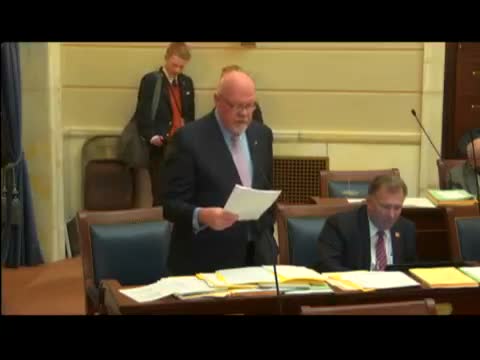
The Senate spent extended floor time on a first substitute to a tax bill that would expand a manufacturing sales‑tax exemption contingent on a future U.S. Supreme Court decision allowing states to collect remote sales taxes. Sponsor Senator Howard Stevenson argued Utah must position itself to be competitive for manufacturing: the substitute would trigger an expanded exemption and dedicate an initial portion of remote‑sales revenue to correct what he called an existing inequity in taxing tools of production.
Opponents asked why the Legislature would earmark portions of a hypothetical windfall—citing the fiscal note estimate in the $90 million to $300 million range—rather than holding the revenue in the existing lockbox and deciding later where it should go. Senator Stevenson and backers said the lockbox remains in place but portions are pre‑identified (including a roughly $83 million allocation for manufacturing) so the exemption can be implemented without the subsidy being swamped by other spending priorities in the future.
Senators also raised questions about whether remote‑sales revenues from voluntary agreements (for example, existing arrangements with large online sellers) would be included; sponsors said the measure applies to remote‑sales revenue that would flow from a favorable Supreme Court ruling and excludes separate voluntary revenue-sharing agreements. The Senate approved the substituted language and sent it to the House for consideration.