Get Full Government Meeting Transcripts, Videos, & Alerts Forever!
Get email alerts on the Environment topic
No spam. Unsubscribe anytime.
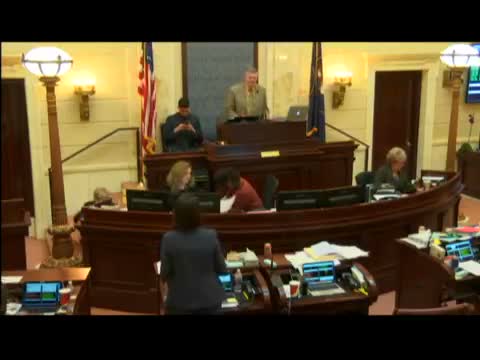
Senate approves bill directing sovereign‑lands safeguards and coordination for Utah Lake restoration
Summary
Senators passed first substitute House Bill 272 to set legislative expectations for Utah Lake restoration projects: coordination with state and federal agencies, protection of public‑trust benefits, and restoration goals including water‑quality, invasive species removal and native species recovery. Sponsors said remediation costs are large and the bill sets standards for proposals that would assume costs.
The Utah Senate approved first substitute House Bill 272, a measure that directs the State Sovereign Lands Office and relevant agencies to use specified safeguards and coordination when considering proposals to restore Utah Lake.
Senator Henderson, sponsor of the measure, described decades of ecological decline in Utah Lake — loss of vegetation, carp invasion and toxic algal blooms — and framed HB 272 as a structure to assess restoration proposals that could be costly. ‘‘The multi‑billion dollar cost of remediating the environmental challenges on Utah Lake is simply cost prohibitive for the state,’’ Henderson said while urging procedural safeguards for any proposal that would seek state sovereign‑land transfers or investments.
The bill requires coordination among the Sovereign Lands Office, state regulatory agencies, the U.S. Fish and Wildlife Service, the U.S. Army Corps of Engineers, and local governments. Restoration goals listed on the floor include improving water clarity and quality, removing phragmites and invasive carp, conserving water and native aquatic species such as the Bonneville cutthroat trout and June sucker, and increasing habitat for shorebirds and waterfowl.
When questioned about cost, the sponsor said the bill itself does not obligate the state to pay the full cost: ‘‘There is no cost. Other people would take care of the cleanup efforts. And in return, they would be able to get some land transferred to them,’’ Henderson said, reflecting that the statutory framework contemplates proposals that bring private or third‑party resources.
Senators voted to pass the bill under suspension of the rules; it will be transmitted to the House for its signature.
Context: The bill was presented as a response to long‑running ecological concerns around Utah Lake and a mechanism to ensure any restoration proposal meets public‑trust criteria and coordinates with federal and local stakeholders.
Sources: Floor remarks by Senator Henderson, floor Q&A on water quality standards and costs, and the roll‑call recorded on the Senate floor.