Get Full Government Meeting Transcripts, Videos, & Alerts Forever!
Get email alerts on the Education Governance topic
No spam. Unsubscribe anytime.
Senate approves constitutional amendment to shift K‑12 governance to an appointed commissioner
Summary
The Utah Senate passed SJR 16 to let voters decide whether to replace the State Board of Education with a governor‑appointed, Senate‑confirmed commissioner of education; senators debated accountability, timing and an amendment to delay the effective date to 2020.
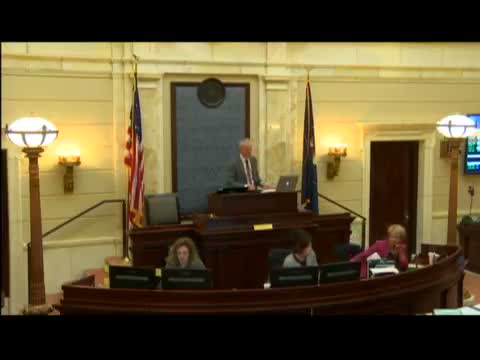
The Utah Senate on the floor advanced a proposed constitutional amendment, SJR 16, that would shift public education governance by creating a governor‑appointed, Senate‑confirmed commissioner of education to run a cabinet‑level state education office. Senator Derek Dabakis, the resolution’s floor sponsor, said the current structure leaves no single official voters can hold accountable for a system that manages approximately $6,000,000,000 in education spending: “No one would take a $6,000,000,000 corporation and manage it the way that we have education managed now in the state of Utah,” he said.
Supporters argued the change would modernize governance and make responsibility—and electoral accountability—clearer. Opponents and some fence‑sitters urged caution about the implementation timeline and staffing. Senator Andrade successfully offered an amendment that moved the plan’s effective date from Jan. 1, 2019, to 2020 to give the Legislature an additional session to adjust statutes and operations if voters approve the amendment.
After debate the Senate voted under suspension of the rules. The clerk recorded 22 yeas, 6 nays and 1 absent; the resolution passed and was sent to the House for consideration. Supporters said voters would have the final say in November if the House concurs and the measure reaches the ballot; opponents warned the change would require substantial statutory work and raised questions about how employees and programs would transfer to a new office.
What happens next: SJR 16 now goes to the House. If both chambers pass a constitutional amendment, Utah voters would decide the change at a future election; the Senate amendment sets an implementation target of 2020 should voters approve the measure.