Get Full Government Meeting Transcripts, Videos, & Alerts Forever!
Get email alerts on the Tax Policy topic
No spam. Unsubscribe anytime.
Senators debate manufacturing sales‑tax exemption tied to remote‑sales ruling
Summary
Senate debate on S.B. 233 centered on a proposed manufacturing sales‑tax exemption that sponsors said would be triggered by changes in remote‑sales tax flows; senators raised concerns about timing and funding mechanics tied to an expected Supreme Court decision.
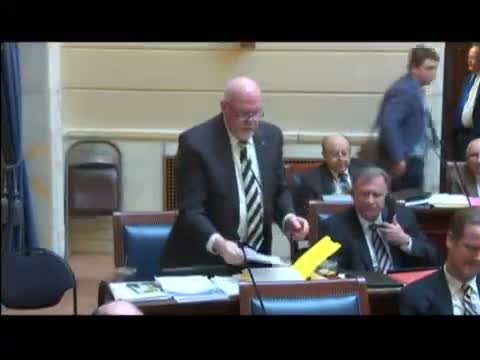
Senator Howard Stevenson brought S.B. 233 to the floor for discussion on March 2, describing the measure as a long‑standing effort to establish a manufacturing sales‑tax exemption that would take effect if remote sales‑tax changes flow to states.
Stevenson and supporters argued the exemption would make Utah more competitive and could stimulate economic activity. He told colleagues the measure would eliminate the three‑year life penalty on equipment for manufacturers and extend the exemption to certain medical remote sales tax flows, subject to technical lockbox provisions described on the floor.
Several senators pressed on the conditional nature of the bill. At least one senator asked whether the bill’s funding or implementation is contingent on the U.S. Supreme Court issuing a decision and whether that could delay or effectively implement the bill far in the future. Sponsor responses noted the Supreme Court had placed a relevant case on its docket and that a decision was expected by June; sponsor said staff could add a sunset if timing extended beyond expectations.
Senator Bramble argued for moving forward instead of waiting, citing decades of work to find a mechanism for the exemption and characterizing the measure as a potential economic stimulant. "This is my eighteenth session... we've been nibbling away at [this] for better than 20 years," he said in floor remarks in support of advancing the bill to third reading.
Floor discussion concluded with the chamber moving S.B. 233 to third reading and direction for staff to prepare technical amendments for the next stage. No final third‑reading vote is recorded in this transcript excerpt; the bill was prepared for third reading pending a technical amendment.