Get Full Government Meeting Transcripts, Videos, & Alerts Forever!
Get email alerts on the Telecommunications topic
No spam. Unsubscribe anytime.
Senate adopts negotiated small‑cell wireless deployment framework
Summary
Second Substitute S.B. 189 — a negotiated framework addressing small‑cell 5G deployment, application shot clocks, and right‑of‑way issues — passed the Utah Senate 26‑0 with sponsors saying the substitute reflects consensus among League of Cities and Towns, wireless carriers and rural telecoms.
The Utah Senate on March 2 adopted a second substitute to S.B. 189, a bill that sets a statewide framework for the deployment of small‑cell wireless infrastructure intended for 5G service.
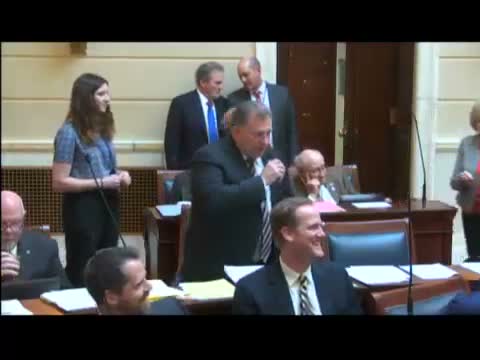
Senator Bramble, who brought the substitute to the floor, said the revised bill represents a negotiated consensus among the League of Cities and Towns, rural telecom companies, wireless carriers and city attorneys. "Second substitute, senate bill 189 now represents the consensus between all of those groups for a framework for the deployment of 5 g, what's called small cell wireless," he said on the floor, describing provisions that address the application process, shot clocks for municipal review and rules for public right‑of‑way and utility pole placements.
Sponsor remarks and floor discussion framed the substitute as a compromise intended to provide predictable timelines for carriers while preserving municipal input on placement and land‑use concerns. The sponsor said the substitute excludes cable applications and focuses on wireless small‑cell facilities.
After brief questioning and a waiver of summation, the chamber substituted and passed S.B. 189 on a roll call. The clerk announced the bill "having received 26 aye votes, 0 nay votes, 3 being absent," and declared the bill passed.
Supporters emphasized the negotiated nature of the substitute. Opponents on the floor did not register a recorded 'nay' in the roll call; floor remarks indicate the bill had broad backing from municipal and industry stakeholders.
Next steps: The bill will proceed following the standard referral process (reported passed by the Senate and will be sent according to legislative procedure).