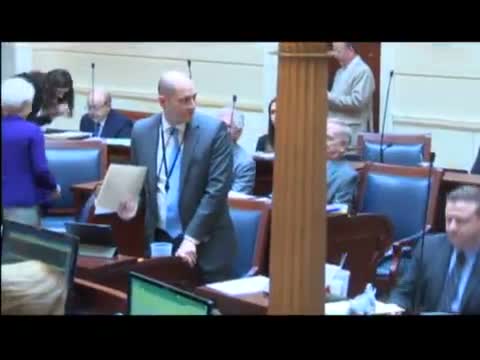
Senate approves bill directing Health Department to pursue Medicaid waivers and block-grant options after vigorous debate
Loading...
Summary
After extended debate about federal match rates, separation of powers and potential impacts on vulnerable populations, the Senate passed a first-substitute bill directing the Utah Department of Health to design and, where federally allowed, pursue Medicaid waivers and per-capita block grants subject to safeguards and reporting requirements.
The Utah State Senate on Day 30 passed a first-substitute bill that asks the Department of Health to design and seek federal waivers and per-capita block-grant arrangements intended to give the state more flexibility in how it spends Medicaid dollars.
Sponsors and backers described the measure as an attempt to allow the state to test alternative payment models, pilot health-savings accounts, and implement work and community engagement requirements while requiring federal matching funds and limiting any change that would put Utah’s current federal match at risk. “There’s always a way to ask them to pull it back,” the sponsor said in defense of giving the department limited authority to pursue waivers, adding the bill sets four explicit criteria (federal match, state cost reduction, improved enrollee health and incentives to use resources wisely).
Opponents warned the bill amounts to an abdication of legislative power and could expose the state to unforeseen fiscal and programmatic risks. Senator Escamilla said she was concerned that the measure included a punitive eligibility component and might jeopardize Utah’s favorable federal match rate; she asked the sponsor how the bill would protect that match. Senator Weiler also questioned whether the bill amounted to a “blank check” for the executive branch to apply for waivers without adequate legislative control.
Supporters said the bill is not an expansion measure and would not alter the existing appropriations requirement for expansion funds above $5 million; instead it directs the Department of Health to develop proposals that must meet the statutory safeguards included in the text. Senator Christensen and others argued limited innovation could be beneficial even if waivers are uncertain to be granted.
The debate included detailed concerns about who would be exempted from new requirements (children, people with disabilities, primary caregivers and certain former foster youth were discussed), the history of Utah’s 70/30 match, and the risk that block-grant approaches can result in reduced federal support over time. Opponents repeatedly urged instead consideration of full Medicaid expansion as an alternative.
After roll call the chamber recorded the bill as passed and the bill will be transmitted to the House for its consideration. The sponsor said the measure requires the department to report back to the Legislature and to avoid implementing components without federal matching funds that meet the bill’s threshold.
The Senate’s action does not itself implement waivers; it directs state executive agencies to pursue negotiated federal approvals where the conditions in the bill are met and requires follow-up reporting to the Legislature.