Get Full Government Meeting Transcripts, Videos, & Alerts Forever!
Get email alerts on the Transportation topic
No spam. Unsubscribe anytime.
Senate passes overhaul of transportation governance with compromises on transit funding
Summary
The Utah Senate approved Senate Bill 136 to change transportation planning, programming and funding, adopting technical amendments and a delayed-spending amendment that creates a two-year hold on a new transit-dedicated account. Supporters said the bill modernizes funding; critics pressed on equity and fee increases.
The Utah Senate on Feb. 20 passed Senate Bill 136, a broad package of transportation governance changes that sponsors said will transform how the state plans, programs and funds roads and transit. The measure cleared the Senate after floor amendments and a division vote on a series of technical and policy changes.
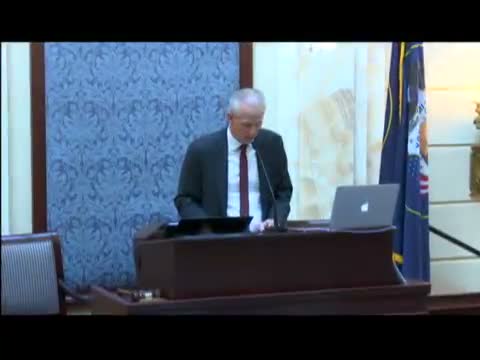
Senator Harper, speaking as a floor supporter, said the bill reorganizes state transportation policy to address population growth and congestion. Harper said the bill "transforms the way that we plan, program, and fund transportation now and into the future" and described the package as a balanced approach that will yield statewide benefits.
Debate on the floor focused in part on a proposed registration surcharge for hybrid and electric vehicles. A colleague opposing the increase urged protecting early adopters, noting there were "about 5,000 cars in the state now that are hybrid or electric" and arguing that raising the fee could chill uptake. Senator Harper and others responded that electric vehicles do not contribute equivalent amounts to road upkeep through gas taxes and that several other states have implemented similar fees.
Lawmakers also adopted Amendment 4, offered by Senator Fillmore, which delays expenditure of funds placed in a transit-dedicated account so those funds must accumulate for two years before legislative appropriation. Fillmore said the pause would give the legislature time to evaluate governance changes at the Utah Transit Authority and "demonstrate that these governance reforms work." Supporters said the delay provides oversight; opponents said it frustrates timely implementation of transit reforms.
The clerk recorded final passage after the amendments; the roll-call announcement on the floor reported 15 yea votes and 12 nay votes. The bill will proceed to the next steps required for enactment.