Get Full Government Meeting Transcripts, Videos, & Alerts Forever!
Get email alerts on the Food Safety topic
No spam. Unsubscribe anytime.
Senate debates bill to regulate commercial raw milk sales; sponsors cite testing and refrigeration requirements
Summary
Senators debated a bill to regulate sale and distribution of commercial raw milk, with the sponsor describing registration, monthly coliform testing and refrigeration requirements and opponents raising public-health concerns and urging caution.
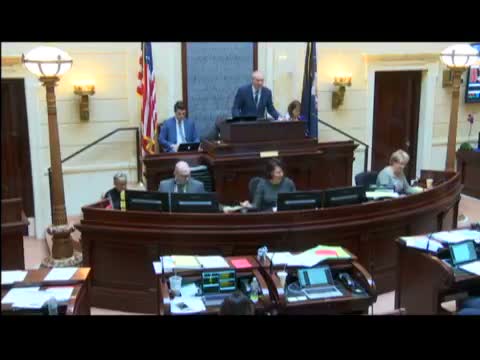
The Utah Senate spent a sustained portion of floor time debating legislation to regulate commercial raw milk sales and distribution.
The sponsor described the bill as targeted to producers selling at commercial scale (the sponsor said operations selling less than a specified small-quantity threshold would remain outside the regulation) and said it would require producers to register with the Department of Agriculture, keep milk refrigerated during transport and delivery, and submit monthly microbial testing. The sponsor said the measures would allow authorities to trace contaminated supplies quickly and impose penalties for noncompliance.
In floor exchanges senators asked who would be liable for illnesses tied to raw milk, and the sponsor said producers would remain responsible and could face civil suits; the floor discussion also recorded a three-tier penalty structure for administrative enforcement — the sponsor described a $300 first penalty, $750 second penalty and $1,500 third penalty plus possible cease-and-desist actions by the Department of Agriculture and the Department of Health.
Opponents, including a physician-member of the Senate, urged more caution and questioned whether the bill sufficiently protects public health. Senators also discussed mobile delivery and consumer susceptibility, with concern that new consumers may lack immunity to pathogens associated with raw milk.
Supporters said regulation brings accountability and public-health protections that are absent when higher-volume raw-milk dealers operate without oversight. The floor exchanges included both technical questions about refrigeration and microbial thresholds and rhetorical moments that drew chamber levity during colloquial remarks.
Why it matters: The bill seeks to move certain commercial raw-milk activity from an effectively unregulated space into a regulated one with testing, refrigeration and labeling requirements; sponsors framed the bill as public-health protective while critics said it may not go far enough to prevent illness.
Next steps: The Senate debated and recorded support for the measure on the third-reading calendar; the transcript does not include final enrolled status in the provided excerpt.