Get Full Government Meeting Transcripts, Videos, & Alerts Forever!
Get email alerts on the Gender Identity Law topic
No spam. Unsubscribe anytime.
Debate over SB 138 stalls after heated floor debate on judicial guidance and youth protections
Summary
Lawmakers spent more than an hour debating Senate Bill 138, which would set statutory guardrails for judicial orders changing a person’s legal gender. Sponsors argued the bill restores legislative clarity; opponents raised constitutional concerns, contested medical definitions, and pushed an amendment allowing parental consent for minors. A forced substitute did not advance on the floor.
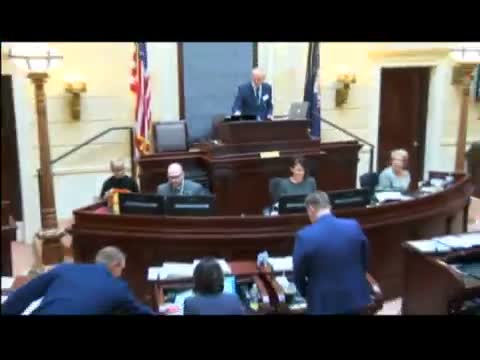
An extended floor debate over Senate Bill 138 exposed deep divisions in the Utah Senate about how (and whether) the Legislature should set statutory rules for court-ordered changes to legal gender.
Sponsor Senator Weiler framed the bill as corrective: after decades of what he described as ad hoc judicial practice, the statute would give judges a uniform set of factors and limit ordered gender designations to three options on official records — "male," "female" or "other." He said the bill seeks to “give the judges some guardrails” and told colleagues the status quo, with widely varying judicial outcomes, is "absolutely unacceptable." He also observed that some transgender stakeholders oppose the bill because reissued birth certificates would be marked as amended, something the sponsor said mirrors existing practice for name changes.
The sponsor walked senators line-by-line through the forced substitute on the floor, explaining provisions that would restrict filing to adults (age 18 or older), require a $360 filing fee (waivable for indigence), mandate a hearing, allow courts to require notice to parties with legal interest, and permit a court to close hearings at the court’s discretion.
Opponents and questioners raised several concerns. Senator Andrade warned about relying on a DSM-5–based definition in statute and asked how the bill would draw a threshold along the transformation continuum. Senator Thatcher highlighted that whether the bill makes the process easier or harder would depend on the judge randomly assigned to a case. Senator Hilliard urged caution on constitutional grounds, saying a statutory age limit or forced notation on birth certificates could be vulnerable in court and that the Senate might be premature in acting before the Utah Supreme Court rules on related litigation.
Senator Escamilla offered Amendment #2 to allow a minor to seek a petition with parental or guardian consent; she argued the change would protect youth who already hold identity documents such as driver’s licenses and face safety risks if state records differ. Several senators said they would vote for the amendment while opposing the bill as drafted.
After debate and a roll-call on a forced substitute, the sponsor’s substitute did not receive sufficient support on the floor during this session and was declared failed; the sponsor directed that the bill be sent to staff for filing (transcript indicates the substitute "received 10" in the floor count but the roll-call text is unevenly transcribed). The transcript records extensive floor questioning, multiple votes on motions to amend and substitute, and senators saying they may continue work on the issues in committee or in subsequent sessions.
What was not decided on the floor was the final statutory approach. Senators flagged legal risk, the potential for future judicial review, differing stakeholder preferences (including transgender advocates and conservative groups like the Eagle Forum), and the interplay with existing court practice. Several senators urged more study or for changes to return in future sessions.
The bill’s chief sponsor said he had reviewed statutes in other states, legal briefs and law-review articles, and he urged members to support his forced substitute as the best available compromise. Other members said they wanted to await more legal clarity or further revisions.
The action leaves the bill alive in the legislative process but without passage on the floor during this sitting; further committee work or amended drafting appears likely.