Get Full Government Meeting Transcripts, Videos, & Alerts Forever!
Get email alerts on the Education Liability topic
No spam. Unsubscribe anytime.
Senate advances bill to cap some liability for nonprofit private schools after extended debate
Summary
The Senate debated and moved SB 201 to third reading, a bill that would extend limited liability protections to nonprofit private schools for physical injuries except in cases of gross negligence and caps damages at specified limits. Supporters argued it recognizes the state cost‑saving role of private schools; critics warned of unintended shifts in costs and competitive advantage.
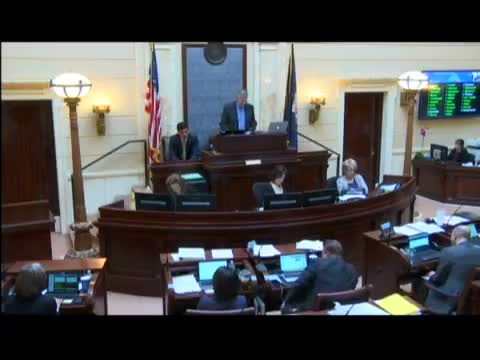
Senators on the floor spent an extended period debating Senate Bill 201, which would extend limited liability protections to nonprofit private schools for certain physical injury claims and cap recoveries in those cases.
Senator Wyler, the floor sponsor, told colleagues the bill "extend[s] a menu that we allow to public schools to private schools," arguing private schools perform many of the same functions as public schools and save the state money by educating roughly 19,000 students outside the public system. "It saves our public education system," Wyler said, noting that private schools that register with the state would still be subject to a definitional and registration process in the Department of Commerce.
Opponents raised concerns over what they called a partial immunity that could shift costs to victims or taxpayers and create a competitive advantage for public schools. Senator Hilliard asked whether home‑based instruction and small operators could end up with blanket immunity and cautioned that insurers and plaintiffs could be affected if coverage declined. Senator Stevenson emphasized that the bill does not remove causes of action for gross negligence and said the policy needs careful balancing: "I struggle with this," he said, noting sympathy for both sides and stressing that insurance should be carried by entities that face potential liability.
Supporters said the proposal was narrow. Senator Weiler explained the bill defines a "nonprofit private school" in statutory sections (lines 9–52 of the bill text) and noted that damages for physical injury would remain capped (the floor discussion referenced caps of $1,000,000 per person and $2,000,000 per incident). He told the Senate that other limited‑liability provisions passed previously for recreational and volunteer contexts had not been overturned by courts.
The debate covered distinctions between ordinary negligence and gross negligence, the potential for competitive advantages in athletics and events if private venues have different exposure, and whether the legislature should standardize insurance requirements. No final, uncontested roll call result was read into the excerpt provided for SB 201 in the transcript, though the floor proceeded through a roll‑call sequence during consideration.
Next steps: the Senate completed floor debate on SB 201 and continued procedural business; the transcript segment that follows shows additional floor items and, ultimately, a motion to recess for committee meetings.