Get Full Government Meeting Transcripts, Videos, & Alerts Forever!
Get email alerts on the Procurement topic
No spam. Unsubscribe anytime.
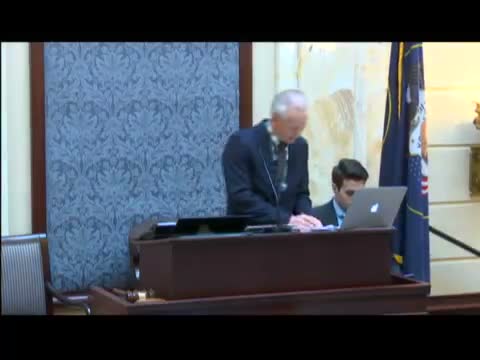
Senate hears competing views on procurement exemption for water commissioners
Summary
House Bill 60 would exempt water commissioners from parts of the state procurement code to ease small purchases in the field. Senators debated past mismanagement, whether the funds are "taxpayer" dollars or water-user funds, and accepted an amendment that preserves procurement oversight; the bill was circled for further work.
House Bill 60, sponsored by Senator Dayton, would allow water commissioners to make certain purchases outside the full state procurement process because commissioners often work in remote locations and need to buy small items quickly.
Dayton argued the water users' funds are generated locally and that requiring purchases through the centralized state procurement system is impractical: "They shouldn't have to go through the state engineer's office to purchase whatever is needed." He said the system had worked for decades and that the change was intended to reduce unnecessary burdens on field operations.
Senator Escamilla moved an amendment requiring consultation with the State Engineer and retaining procurement code oversight for reimbursement and larger purchases. Supporters of the amendment and other senators warned of a history of mismanagement and urged safeguards. "Rather than opting them out, I think the focus should be on creating commissioners so that they can adhere to the policies," one senator said in favor of keeping procurement safeguards.
Senator Weiler explained that once money is deposited into a state account it becomes public funds and requires accountability under the procurement code; he noted the procurement code already allows small purchases under $1,000 and emergency purchases with documentation.
Opponents emphasized the funds' origin as fees charged to water users rather than general tax revenue: "This is not taxpayer dollars," Senator Dayton said, arguing that the users fund and should have operational flexibility. After extended debate the Senate voted to circle the bill, signaling more work will be done to reconcile operational flexibility with procurement safeguards and oversight.
Next steps: sponsor and stakeholders were asked to refine language with the State Engineer and Division of Finance so the bill can return to the floor with clearer rules on exemptions, reimbursement and accountability.