Get Full Government Meeting Transcripts, Videos, & Alerts Forever!
Get email alerts on the Cannabis Policy topic
No spam. Unsubscribe anytime.
Senate advances two‑part CBD bill: product testing/registration and DEA waiver push for pharmacy dispensing
Summary
The Senate passed a second substitute for a bill that (1) creates a registration and testing regime for hemp‑grade CBD products to protect consumers and (2) seeks a DEA waiver to allow medical‑grade CBD to move from physician prescription to pharmacy dispensing under controlled conditions.
The Utah Senate moved a two‑component bill forward that sponsors described as a narrow, public‑safety approach to hemp‑derived cannabidiol (CBD).
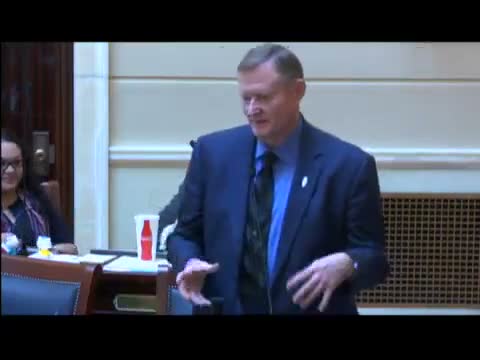
Sponsor remarks explained the bill has two parts. First, the Department of Agriculture would register manufacturers selling hemp‑grade CBD in Utah and collect fees to fund product testing to ensure products are actually hemp‑grade and are not laced with contaminants. "The first part of the bill simply sets up a process where the Department of Ag can register those products...they would use that fee to test the product to ensure that it is hemp grade CBD," the sponsor said on the floor.
Second, the bill includes a planned waiver request to the U.S. Drug Enforcement Administration. Sponsor testimony said the waiver would let Utah pursue a controlled pathway where physicians (MD/DO) could prescribe a medicinal dosage form of hemp‑grade CBD and that pharmacies could dispense it under controlled conditions and report to the controlled substances database. The sponsor described this as an "outside the box" pilot requiring education and data collection, and said the DEA indicated interest in the idea during discussions.
Senators pressed the sponsor on patient access concerns, specifically whether the bill would affect Charlie's Law — the state policy that enables certain epilepsy patients to obtain CBD therapy. The sponsor said the substitute includes definitions and language crafted with advocates to preserve access for qualifying patients. "So it does not disrupt in any way the...patients qualifying under Charlie's law," the sponsor said.
The chamber recorded a 26–0 roll call to read the second substitute for Senate Bill 130 a third time. The sponsor said state testing and a physician‑pharmacy pathway are intended to protect patients and create research and education components the DEA would want to see for any waiver approval.
Next steps: the bill was ordered for third reading and will continue through the legislative process.