Get Full Government Meeting Transcripts, Videos, & Alerts Forever!
Get email alerts on the State Land Policy topic
No spam. Unsubscribe anytime.
Senate advances bill setting state land policy; amendment narrows exceptions after county and UDOT concerns
Summary
The Utah Senate amended and passed SB 52 to establish a policy preferring leases over sales of state land while preserving the option to sell; debate focused on UDOT parcels, a large Draper property, and potential county tax impacts.
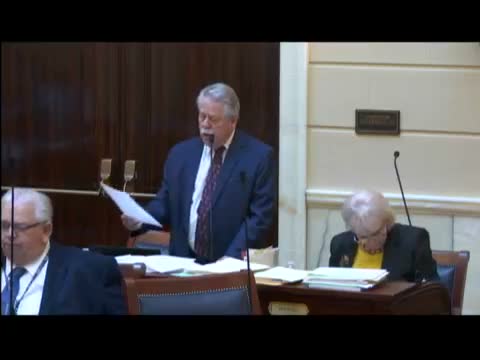
The Utah Senate on the floor advanced Senate Bill 52, a measure that establishes a public-policy preference for leasing state-owned land while leaving sale as an available option. Senator Howard Davis offered Amendment 1 (dated Feb. 7 at 11:28 a.m.) to clarify the bill’s definitions of "state land," to exclude political subdivisions and school districts and to make explicit that land owned by the Department of Transportation is not treated the same as other state land for purposes of the exception.
The amendment followed sustained questioning from colleagues about whether the bill would impede large, complex transactions such as the potential redevelopment of the Draper prison property, which senators described as a roughly 690‑acre site. Senator Davis said the bill was intended to "set a public policy that is preferred to lease over sale" while preserving the authority to sell if that is the best use for the state. "This only sets a policy that we prefer to lease, if possible," he said, adding that sales would remain on the table when appropriate.
Senators pressed for clarity over who would approve specific sales and what role the Legislature’s management committee would play. Senator Adams and others asked whether requiring legislative review would create a "cloud" that would chill transactions; Senator Davis said the selling agency would recommend transactions and that the management committee’s review is similar to legislative review for large settlements, allowing oversight without permanently blocking dispositions.
Members also raised concerns about local impacts if land is sold into private ownership. A senator identified as "Mister Spero" questioned whether counties would be compensated for increased responsibility and costs after state land is sold and placed on local tax rolls. Davis responded that lease terms could address local treatment and that improvements and personal property developed on leased or sold land would generally be subject to local taxation under standard practice.
Supporters said the clarified amendment strikes a balance between conserving state lands while allowing flexibility when sale better serves economic development or other public purposes. After floor debate the Senate adopted the amendment and moved the bill forward for final consideration, as recorded on the floor.
Next steps: the bill, as amended, was moved forward on the floor; the transcript records floor action and amendment adoption but does not include full downstream enactment details in this session record.