Get Full Government Meeting Transcripts, Videos, & Alerts Forever!
Get email alerts on the Criminal Procedure topic
No spam. Unsubscribe anytime.
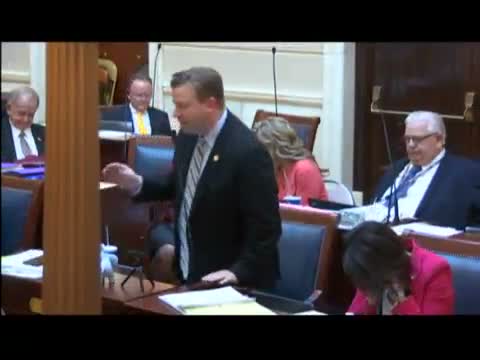
Senate considers bill clarifying when police can order blood draws after hospital incident
Summary
Senators debated House Bill 43, a bill clarifying blood-draw procedures after an incident in which a nurse was handcuffed while refusing a police order. Sponsors said the bill emphasizes warrants as the default and repeats existing authorized-drawer language in a new section of statute 77-23-213.
House Bill 43, introduced on the Senate floor, sought to clarify when law enforcement may order or obtain blood samples and which personnel may lawfully draw blood.
Sponsors framed the measure in the context of a recent University of Utah Hospital episode in which a nurse was handcuffed after refusing an officer’s order to withdraw blood from an unconscious patient. Senator Weiler (sponsor) told colleagues the bill is intended to make clear the law governing blood draws and avoid a recurrence of the incident: "this makes it very clear what it was," the sponsor said on the floor.
The bill emphasizes that, except in narrow, judicially recognized exigent circumstances (such as imminent destruction of evidence or hot pursuit), officers should seek a warrant before obtaining a blood sample; sponsors cited recent court decisions that treat blood draws as more invasive than breath tests. The measure repeats existing language on who may draw blood (paramedics or other authorized medical personnel acting at an officer’s request) in a new statutory section (sponsor referenced "77 dash 23 dash 213").
Senators pressed the sponsor about why law enforcement sought blood from the specific victim in the hospital case and about safeguards preventing misuse of authorization to draw blood; the sponsor said the case specifics were beyond the bill’s scope but explained that the statute restates current authorized-drawer rules and that modern warrant procedures can be executed quickly.
Following floor debate, the Senate moved the bill for third reading and recorded a roll-call (detailed vote tallies were read on the floor during the roll-call sequence).