Get Full Government Meeting Transcripts, Videos, & Alerts Forever!
Get email alerts on the Tax Policy Property Exemption topic
No spam. Unsubscribe anytime.
Senate approves expansion of property tax exemption to fully leased public‑use parcels; charter school impact debated
Summary
The Senate advanced first substitute Senate Bill 76 to allow an annual property‑tax exemption when an entire parcel is 100% leased to state or local government entities under a triple‑net lease, with debate focused on administrative complexity and effects on charter schools and local tax receipts; the bill passed on third reading.
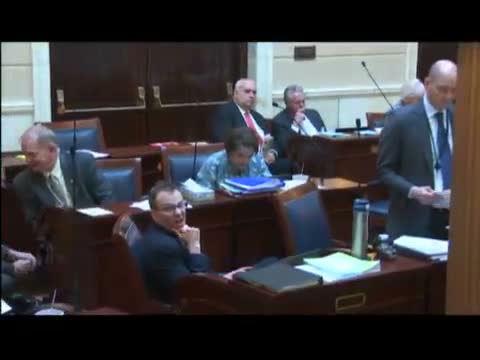
The Utah Senate voted to advance first substitute Senate Bill 76, a bill that broadens a property‑tax exemption to apply where an entire tax parcel is leased 100% to state or local government entities under a triple‑net lease. Sponsor Senator Hemmert said the measure addresses situations where public services are delivered from leased space and argued the exemption prevents tax dollars intended for services from being used to pay property tax.
Senator Hemmert explained the policy and administrative choices on the floor: the exemption applies only when an entire tax parcel is leased to a qualifying public lessee on a triple‑net basis, and the exemption must be applied for annually so local taxing authorities can administer notices and tax rolls. “It only applies to property that is 100% leased by the state or local government entities on the first hand… and it only would apply where this property is under a triple net lease,” the sponsor said.
Several senators raised questions and concerns. Senators asked whether the exemption would apply to charter schools that lease part of a building or occupy a single floor; the sponsor and clerk clarified that the bill would not apply to partial‑building leases and that the intent was to avoid administratively burdensome partial exemptions. Senator Filmore described examples where state agencies lease entire buildings and pay substantial property tax embedded in rent, arguing that relieving that burden would free operating funds for services. Senator Hilliard pointed to fiscal-shift concerns, saying the fiscal note indicates the exemption transfers tax liability rather than forgives it, and noted rural districts were concerned about potential impacts on revenue.
The Senate discussed implementation details including who must file the annual application and whether local taxing authorities can review eligibility; the sponsor said the exemption is mandatory where the statutory conditions are met but requires application and administrative timing to accommodate tax-notice schedules. After floor debate and summation, the Senate voted to read the bill a third time and recorded a final tally of 23 yeas, 3 nays and 3 absent. The bill proceeds to further consideration consistent with the legislative calendar.
Supporters framed SB76 as improving efficiency and directing more funds to service delivery (for example, schools and human services); opponents cautioned about technical consequences for local tax bases and urged careful attention to implementation and fiscal impacts.
Next steps recorded in the transcript are the Senate’s third‑reading passage; the bill’s final enactment will depend on subsequent House action or any conference committee adjustments.