Get Full Government Meeting Transcripts, Videos, & Alerts Forever!
Get email alerts on the State Land Policy topic
No spam. Unsubscribe anytime.
Senate moves bill favoring long-term leases of state land to third reading after debate on exemptions
Summary
Senator Davis said the bill sets a public-policy preference to lease state land rather than sell it; senators raised questions about UDOT exemptions, potential conflicts in statutory definitions, tax consequences and financing under long leases. Sponsor agreed to pursue clarifying amendments; the Senate recorded 22 yea, 3 nay, 4 absent to read the bill a third time.
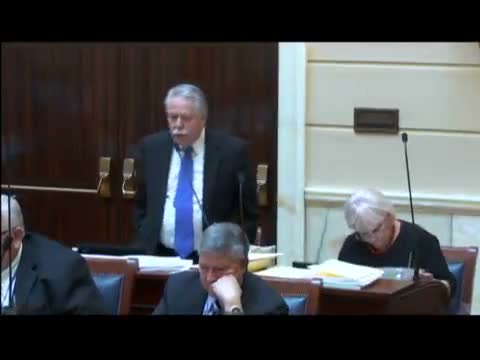
The Utah Senate debated a policy bill that would establish a preference for leasing state-owned land before selling it, with sponsors arguing leases preserve public ownership and allow continued state use of strategic parcels in the future.
Senator Davis, sponsor of the measure, said the bill "sets a public policy to lease first" and does not prohibit sales but urges the state to consider leasing to maintain long-term stewardship and retain options for future public needs. He cited hypothetical scenarios such as future campus or facility needs that would be harder to meet if land were sold outright.
Several senators asked detailed questions. Senator Van Tassel and Senator O'Kerlin queried whether the bill excluded settler property and whether large numbers of small UDOT parcels would be swept into a leasing requirement; Senator Andrigg raised concerns that UDOT is conducting a large audit of remnant parcels that are generally under 300 acres. Senator Harper warned of potential conflicts with existing code provisions that handle returning property to original owners or placing parcels back on the tax rolls.
In response Davis said he would work with colleagues to draft clarifying amendments and was willing to exempt UDOT if necessary. He emphasized the bill is intended as a policy preference rather than a mandate to prevent unintended consequences.
A roll-call vote recorded 22 yea, 3 nay with four senators absent; the presiding officer ordered the bill to be read a third time. Sponsor committed to work on language to resolve statutory-definition and exemption concerns before next action.