Get Full Government Meeting Transcripts, Videos, & Alerts Forever!
Get email alerts on the Tax Policy topic
No spam. Unsubscribe anytime.
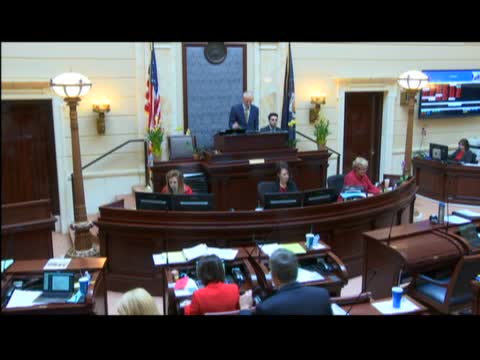
Senate amends business-income tax rules; lawmakers press for clearer fiscal note
Summary
Senators amended S.B. 72 to clarify when businesses are categorized for single-sales-factor tax treatment and adopted a sponsor amendment intended to neutralize the fiscal impact; members pressed the Tax Commission and bill sponsors for a revised fiscal note after inconsistent figures appeared.
SALT LAKE CITY — The Utah Senate advanced an amended S.B. 72 on business income tax methodology after lawmakers questioned the bill’s fiscal-note estimates and sought clarification on the practical effects of the change.
Senator Harper, sponsor of the measure, said the measure will clarify how taxpayers are characterized into industries for single-sales-factor tax treatment and prevent ambiguity that has existed since 2009. "The purpose of Senate Bill 72 is to clarify the standard so taxpayers and the Tax Commission have predictable and stable methods," he said on the floor.
Harper moved Amendment No. 2 under his name, saying it would remove the bill’s fiscal note so the measure would be slightly revenue positive and effectively revenue neutral. Several senators, including Senator Bramble and Senator Hilliard, pressed for a clearer fiscal accounting. Senator Bramble asked whether a particular exclusion in the amendment was intended to eliminate a roughly $20,000 negative fiscal note; Harper agreed that the change reduced the negative impact. Senator Hilliard asked about a striking inconsistency in the fiscal analysis, noting apparent gaps between figures (one place listed $1,018,000; another listed $18,000,000) and requested a revised fiscal note: "I've asked for a revised fiscal note so it's clear because it's inconsistent with what I'm trying to do. It's supposed to be revenue neutral."
After discussion, Senator Harper said the change was intended to be revenue neutral and moved the amended bill for third reading. The Senate recorded widespread 'aye' responses; the amendment was adopted and the bill advanced. Senators flagged the fiscal-note inconsistency for follow-up, and the sponsor committed to seek a corrected fiscal note before final implementation.
The debate illustrates lawmakers’ attention to the fiscal implications of tax-code technical fixes and their insistence on clear, consistent fiscal estimates before significant tax changes are finalized.