Get Full Government Meeting Transcripts, Videos, & Alerts Forever!
Get email alerts on the Family Law topic
No spam. Unsubscribe anytime.
Senate advances alimony bill clarifying cohabitation timing; sponsors say it addresses a recent Supreme Court read
Summary
Senators debated SB 51, which would allow alimony termination actions within one year after discovering cohabitation; sponsor said the change responds to a Utah Supreme Court decision and aims to close a timing "gotcha." Final Senate action recorded in transcript (vote count noted in roll call).
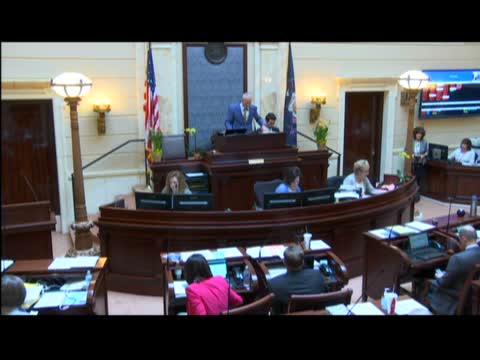
Senate Bill 51, aimed at clarifying when alimony may terminate if a former spouse cohabits, was presented and debated on the Senate floor. Sponsor Senator Hilliard said the bill emerged from a recent Utah Supreme Court decision and would permit a party to file an action "within one year after the time you find out that cohabitation occurred."
Sponsor presentation and rationale Senator Hilliard described the Supreme Court case that prompted the bill: under current statute, the courts read the phrase "is cohabiting" strictly, which in one case led to dismissal because the party was not cohabiting at the moment the filing occurred. "So what this statute basically does... you can file it anytime you want within 1 year after the time you find out that cohabitation occurred," Hilliard said, arguing the change protects parties who learn later of cohabitation.
Key points of disagreement and clarification Senators discussed how to define cohabitation, with one senator noting it is difficult to prove and raising questions about factors like shared residence, joint accounts or keys. Sponsor and supporters said the bill is intended to address a narrow procedural problem the court identified, not to change merits-based determinations of cohabitation.
Vote and procedural status The transcript records a roll-call sequence on the third reading for SB 51 with many senators voting "aye." A later clerk entry indicates the Senate took final action (the transcript records the count as "having received 24 ..." in the clerk's announcement). The bill was processed on the floor; the record supplied does not include a detailed breakdown of absences or any floor amendments adopted during that vote.
Context and significance Supporters said SB 51 fixes a procedural timing issue highlighted by the Utah Supreme Court and does not purport to change the evidentiary standard for proving cohabitation. If enacted, the change would affect the time window in which a party can bring a motion to terminate alimony for cohabitation discovered after the fact. The bill now proceeds to the next step in the legislative process.