Get Full Government Meeting Transcripts, Videos, & Alerts Forever!
Get email alerts on the State Legislation topic
No spam. Unsubscribe anytime.
Utah Senate advances bill letting local bodies seek court-ordered mental evaluations for elected officials
Summary
Senate Bill 38 would allow a local elected body to petition a court for a mental-health evaluation of a local elected official when there is concern about competency; sponsors say counties would pay court and defense costs and judges would determine competency. The Senate passed the bill on third reading.
Senate Bill 38, a measure to allow local governing bodies to petition a court for a mental-health evaluation of a local elected official, advanced on the Senate floor after extended debate and passed on third reading.
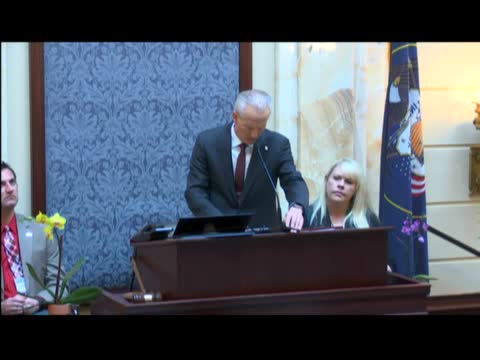
Sponsor Senator Thatcher described the bill as a two-year effort to address cases where an elected official 'is impaired in their ability to do their job.' Thatcher said the measure would authorize a local elected body to petition a court for a mental-health evaluation performed by a court-appointed specialist when there is reasonable concern about competency. 'If a medical professional determines that they are not competent, nor can they be made competent through reasonable accommodations, then there should be a method for that person to get help,' Thatcher said.
Thatcher told colleagues that the statute is intentionally narrow: it applies only to impairments that are 'not temporary in nature' and includes high procedural bars negotiated with local governments. The sponsor said some counties pressed for a limited scope and that the current version applies to counties with larger legislative bodies.
Senators pressed the sponsor on several practical points. Senator Hilliard asked whether the bill differentiates temporary from permanent incapacity, noting people sometimes recover after medical events; Thatcher replied the bill is intended for impairments that are not temporary and that the language will be examined for specifics. Senator Hilliard also asked about health-insurance continuity for officials who step down; Thatcher said that question was not addressed in the negotiations and could create a fiscal note if added.
On the question of legal costs, Thatcher said counties that vote to bring the petition would pay 'all court costs' and also pay for the defense of the individual 'win, lose, or draw,' and that the bill includes civil penalties for filings found to be brought in bad faith.
The Senate voted to read SB 38 for a third time and then recorded a roll-call vote on final passage; the measure received 26 yay votes, 0 nay votes, and 3 absent. The bill will proceed to the House for consideration.
Why it matters: The bill creates a legal mechanism for local governments to seek judicial review when there is a credible concern that an elected official is incapacitated, with county financial responsibility for proceedings and safeguards against abuse in the form of penalties for bad-faith filings.
Next steps: SB 38 will be transmitted to the House for further action.