Get Full Government Meeting Transcripts, Videos, & Alerts Forever!
Get email alerts on the Local Government Competency topic
No spam. Unsubscribe anytime.
Utah Senate approves measure letting county bodies seek court competency evaluations of local officials
Summary
The Senate passed Senate Bill 38, allowing county legislative bodies (in counties with more than three members) to petition a court for a judicial competency evaluation of a local elected officer if the legislative body votes unanimously (excluding the member in question) and agrees to pay legal costs; the judge may penalize bad-faith petitions.
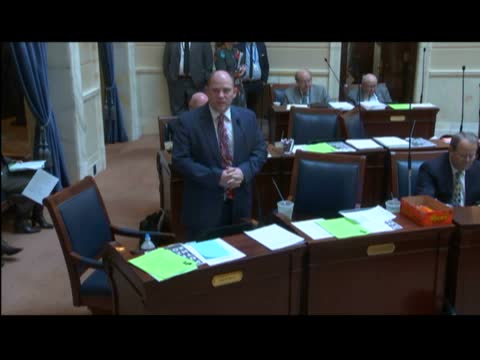
The Utah Senate on Day 9 passed Senate Bill 38, a measure that enables a county legislative body in counties with more than three members to petition a court for a judicial evaluation of a local elected official's mental competence.
Sponsor and floor sponsor explained the bill as a negotiated compromise with the League of Cities and Towns and the Utah Association of Counties designed to provide a process when there is significant concern about an elected official’s capacity. Under the measure, the legislative body would first ask the official to voluntarily submit to an evaluation by a licensed professional; if the official refuses, the legislative body must vote unanimously (excluding the member in question) to proceed and commit to paying both parties’ court and defense costs.
"If that vote is unanimous, they are committing to paying for all legal fees, including the defense of the person in question," the sponsor said, describing the judicial safeguards and noting that a judge would decide whether sufficient evidence exists to order an evaluation. The sponsor added the judge could impose civil penalties if a petition is filed in bad faith.
Supporters said the proposal is limited in scope and intended to be used only in narrow cases, not as a political tool. "This is not something that could be used politically," the sponsor said, noting the judicial process is key and that judges can sanction bad-faith filings. Several senators raised concerns that the bill applies only to counties with more than three legislative members and debated whether a constitutional amendment would be needed to cover statewide officers.
The Senate recorded 27 yea votes and 1 nay on the motion to pass the bill.